Sat, May 30, 2020
NASA Continues to Monitor Weather, Cross Fingers, Keep Rabbit's Foot Close By...
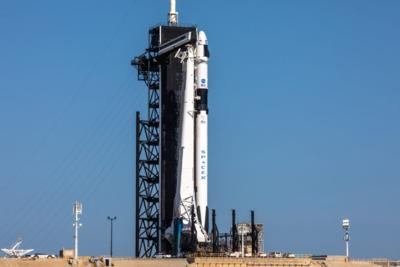
NASA and SpaceX continue planning toward a Saturday, May 30, launch attempt of NASA’s SpaceX Demo-2 mission to the International Space Station with NASA astronauts Robert Behnken and Douglas Hurley. Although the weather models for Saturday show an improvement in conditions around Launch Complex 39A at NASA’s Kennedy Space Center in Florida, teams continue to monitor launch and down range weather. Teams still want more weather data to determine if they will proceed with a launch attempt or focus on the backup attempt on Sunday, May 31.

On Saturday, the U.S. Air Force’s 45th Weather Squadron predicts a 50% chance of favorable conditions at launch time. The primary concerns remain flight through precipitation, anvil clouds and cumulus clouds. However, outside of the launch site are some areas of concern with a potential for lightning storms and high winds and waves along the flight path. All weather conditions need to be within acceptable limits both for launch and the flight path for NASA and SpaceX to be “go” for the launch attempt.
On Sunday, the 45th Weather Squadron predicts a 60% chance of favorable conditions at launch time. Weather models also show an improvement in conditions throughout the flight path.
NASA’s SpaceX Demo-2 mission will return human spaceflight to the International Space Station from U.S. soil on an American rocket and spacecraft as a part of NASA’s Commercial Crew Program. Demo-2 will be SpaceX’s final test flight to validate its crew transportation system, including the Crew Dragon, Falcon 9, launch pad and operations capabilities. During the mission, the crew and SpaceX mission controllers will verify the performance of the spacecraft’s environmental control system, displays and control system, maneuvering thrusters, autonomous docking capability, and more.

Behnken and Hurley will join the Expedition 63 crew on the station to conduct important research, as well as support station operations and maintenance. While docked to the station, the crew will run tests to ensure the Crew Dragon spacecraft is capable on future missions of remaining connected to the station for up to 210 days. The specific duration for this mission will be determined after arrival based on the readiness of the next commercial crew launch.
Finally, the mission will conclude with the Crew Dragon undocking from the station, deorbiting and returning Behnken and Hurley to Earth with a safe splashdown in the Atlantic Ocean.


More News
Its Offerings Are Lighter, Cleaner, and Now Pushing Past 1,000nm on SAF Jet Fuel DeltaHawk’s diesel-powered aircraft lineup has seen incredible upgrades over the last few yea>[...]
The Airplane Experienced A Total Loss Of Engine Power On December 3, 2025, about 1600 central standard time, a Mooney Aircraft Corp. M20K, N57229, was substantially damaged when it>[...]
Make Sure You NEVER Miss A New Story From Aero-News Network Do you ever feel like you never see posts from a certain person or page on Facebook or Instagram? Here’s how you c>[...]
Aero Linx: European Society of Aerospace Medicine (ESAM) As a pan-European, independent forum, it works to promote the safety and health of all persons involved in aviation and spa>[...]
“We are excited to see Wisk achieve this milestone, and I’m so proud of the team that made it possible. The team at Wisk has built advanced technologies across flight c>[...]



 Aero-TV: DeltaHawks Diesel Power Steps Into the Spotlight


 See All