
Aviator Missing From WWII Identified | Aero-News Network
Aero-News Network
RSS icon RSS feed
podcast icon MP3 podcast
Subscribe Aero-News e-mail Newsletter Subscribe

** AIRBORNE 06.18.13 Aero-TV-- CLICK HERE! ** HD iPad-Friendly Version -- AIRBORNE 06.18.13 **

** AIRBORNE 06.14.13 Aero-TV-- CLICK HERE! ** HD iPad-Friendly Version -- AIRBORNE 06.14.13**

** AIRBORNE 04.01.13 SPECIAL EDITION of Aero-TV-- CLICK HERE! ** HD iPad-Friendly Version -- AIRBORNE 04.01.13 SPECIAL EDITION **

Thu, Jun 28, 2012

Aviator Missing From WWII Identified

Will Be Buried With Full Honors June 29

The Department of Defense POW/Missing Personnel Office (DPMO) announced Tuesday that the remains of a U.S. serviceman, missing in action from World War II, were recently identified and will be returned to his family for burial with full military honors.

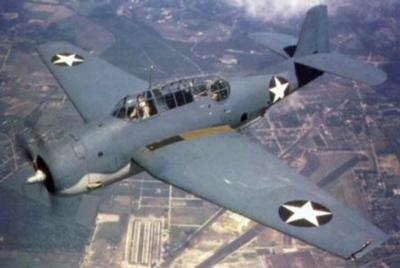
Navy Radioman 1st Class Harry C. Scribner, 20, of Seattle, will be buried June 29, in Minneapolis, Minn. On Aug. 2, 1943, Scribner and two other men were aboard a TBF-1 Avenger (similar aircraft pictured) that crashed on the island of Espiritu Santo, New Hebrides—now known as Vanuatu—while on a routine calibration flight. Sixteen days after the crash, one crewman was rescued from the jungle but was unable to assist recovery teams with locating the crash site. Shortly thereafter, personnel from the Army Graves Registration were unsuccessful in locating the site as well, and the two men were deemed unrecoverable.

In 1999, a U.S. recovery team investigated several World War II aircraft crash sites on Vanuatu. In addition to human remains, at one location the team located aircraft wreckage which correlated with Scribner’s aircraft.

From 2000 to 2011, additional U.S. recovery teams from the Joint POW/MIA Accounting Command (JPAC) excavated the crash site three times, recovering additional human remains and military equipment.

Scientists from JPAC and the Armed Forces DNA Identification Laboratory used forensic identification tools and circumstantial evidence, including dental comparisons and mitochondrial DNA—which matched that of Scribner’s cousin—in the identification of his remains.

FMI: www.dtic.mil/dpmo

Advertisement

More News

Aero-TV: Garmin’s GNC-255 –- Back To Basics

Garmin's New Aviation VHF Radios Early this year, a new series of aviation VHF COM and NAV/COM radios, the GTR and GNC series, was announced by Garmin. As the replacement products >[...]

EADS And Siemens Enter Long-Term Research Partnership

Sign MoU With Diamond Aircraft On Electric Propulsion System EADS and Siemens are entering into a long-term research partnership to introduce new electric propulsion systems that c>[...]

ANN's Daily Aero-Term (06.19.13): Ceiling

The heights above the earth's surface of the lowest layer of clouds or obscuring phenomena that is reported as broken, overcast, or obscuration, and not classified as thin or parti>[...]

ANN's Daily Aero-Linx (06.19.13)

The Army Aviation Heritage Foundation The Army Aviation Heritage Foundation (AAHF) is a non-profit public educational foundation dedicated to presenting the Army Aviation story to >[...]

Aero-News: Quote Of The Day (06.19.13)

“The serial electric propulsion allows us to design airplanes with totally different characteristics than today. Vertical take-off and high-speed cruise can be realized in a >[...]

blog comments powered by Disqus



Advertisement

Advertisement

Podcasts

Advertisement

© 2007 - 2013 Web Development & Design by Pauli Systems, LC

