Official Probable Cause Report Spreads Blame
 The NTSB report blames
the pilots in both aircraft and the tower controllers in a mid-air
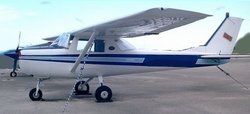
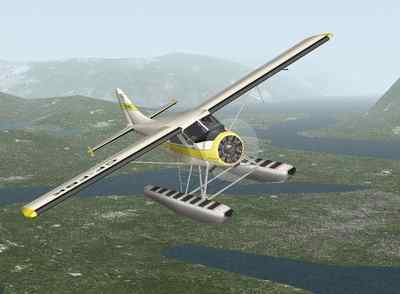
last year between a C-150 and a de Havilland Beaver (file photos of
types below). As ANN reported, the two
aircraft collided as they were approaching the pattern at
Renton, WA last August. Following the collision, the Beaver landed
with substantial damage reporting five injured. Two aboard the
C-150 were killed when it spiraled out of control.
The NTSB report blames
the pilots in both aircraft and the tower controllers in a mid-air
last year between a C-150 and a de Havilland Beaver (file photos of
types below). As ANN reported, the two
aircraft collided as they were approaching the pattern at
Renton, WA last August. Following the collision, the Beaver landed
with substantial damage reporting five injured. Two aboard the
C-150 were killed when it spiraled out of control.
The report says the C-150 was cleared by a tower controller --
in training and supervised -- to enter downwind for Rwy 33 via the
forty-five. The controller also advised the C-150's pilot of
"...traffic ahead and to your right, one thousand six hundred,
turning southbound, type unknown." The Cessna pilot did not respond
to the advisory.
Another Beaver (not the accident plane) approaching the airport
was cleared to enter downwind for Rwy 33 and advised the C-150 was
passing behind him, no factor.
Around 20 seconds later, the accident Beaver's pilot reported
inbound and was notified of traffic (the accident Cessna)
"...twelve o'clock, two miles, a Cessna, one thousand three hundred
southbound." The controller then cleared the Beaver to enter
downwind on the forty-five following the Cessna.
When the controller asked the accident Beaver's pilot if he had
the traffic in sight, the pilot responded "...we've got an aircraft
on downwind ahead of us in sight." The controller instructed him to
"...follow that aircraft."
At that point, three aircraft were approaching the downwind for
Rwy 33 on the forty-five. When the first Beaver reported entering
downwind he was cleared to land on the water adjacent Rwy 33. The
controller then cleared the Cessna to proceed direct to the
downwind.
Now we have the C-150 southbound on downwind to land on Rwy 33,
and a Beaver (not the accident plane) also on downwind, ahead and
to the outside of the Cessna, landing on the water. The accident
Beaver is about to enter downwind on the forty-five.
When the pilot of the Cessna reported the Beaver to his right
approaching downwind in sight, the controller asked the approaching
beaver if he had the Cessna in sight. The Beaver's pilot replied,
"…affirmative. We have the aircraft on base."
At this point the controller asked the accident Beaver if he had
the traffic passing under him (the accident Cessna) in sight. The
accident Beaver's pilot answered "...ah yeah, base to final landing
on the water."
The Cessna's right wing glanced off the Beaver's left float
before impacting the inboard portion of the right float. The
Beaver's prop penetrated the top outboard section of the Cessna's
right wing before impacting its fuselage rendering it
uncontrollable.
In his statement following to the NTSB, the accident Beaver's
pilot said, "The Beaver ahead of me was given clearance to proceed
as requested. I informed the tower that I had the traffic ahead and
on downwind in sight and was told to follow him."
The NTSB officially blames the accident on the failure of the
Beaver pilot to understand air traffic advisory information and the
failure of the Cessna pilot to maintain visual separation,
resulting in a midair collision. A factor contributing to the
accident was the inadequate traffic advisory information provided
by air traffic controllers.



 ANN's Daily Aero-Term (12.01.25): Convective SIGMET


 See All