
Wed, Sep 11, 2019
The New Version Smart Aircraft Interface Device (AID) Now Connects To IFEC Systems
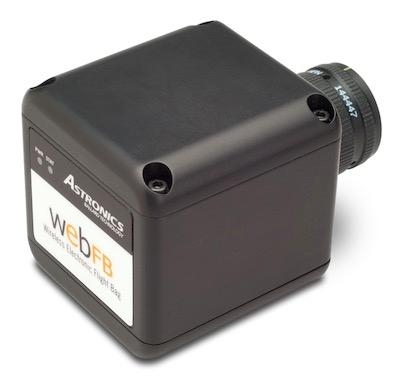
Astronics has released a new “extended range” version of the compact webFB Smart Aircraft Interface Device (AID). The new extended range model enhances the capability of the webFB line by allowing use outside of the flight deck and enabling real-time, secure data transfer off the aircraft.

The ultra-compact webFB easily fits in the palm of the hand, yet incorporates the capabilities of both an AID and a wireless server. The built-in AID safely gathers essential data from the aircraft’s ARINC 429 and 717 databuses and conveys it to custom software or electronic flight bag (EFB) apps hosted on the webFB internal server. Using a wireless connection to portable EFB tablets, the webFB securely delivers this valuable information right to the fingertips of the flight crew.
The original webFB’s Wi-Fi range is intentially attenuated to limit use to the flight deck, where it seamlessly perfoms the function of transferring data in real time to flight crew EFBs. The Extend Range webFB adds the capability to connect with the cabin IFEC system, so that airlines can benefit from:
- Automated post-flight data transfer to eliminate costly and latent manual data collection
- Real-time transmission of aircraft data to enable in-flight reporting of monitored conditions
- On-board document storage to provide ready backups of EFB content
“Based on customer feedback, we enhanced our webFB product to go beyond traditional EFB connectivity into IFEC data connectivity, while maintaining strong access and data security. This helps airlines realize operational savings through the use of real-time aircraft data,” said Jon Neal, President of Astronics Ballard Technology. “An additional benefit to airlines is our ability to offer this level of data connectivity in a quick-installation AID that minimizes aircraft downtime and requires no aircraft modification.”
The Extended Range webFB has a Supplemental Type Certificate (STC) for use in the flight deck on Boeing 737 aircraft. It also has installation approval by the European Aviation Safety Agency (EASA), Transport Canada, and Direccíon General de Aeronáutica Civil (DGAC Mexico) for use on Boeing 737 aircraft. In 2018, the webFB was selected by Norwegian Air Shuttle (NAS) to improve and automate aircraft data collection. NAS has installed the webFB on all of its Boeing 737 Next Generation (NG) aircraft.
(Image provided with Astronics news release)
More News
Dave Juwel's Aviation Marketing Stories ITBOA BNITBOB ... what does that mean? It's not gibberish, it's a lengthy acronym for "In The Business Of Aviation ... But Not In The Busine>[...]
The Pilot Attempted Several Times To Restart The Engine And Diverted To Long Beach Airport/Daughtery Field On October 20, 2025, about 1603 Pacific daylight time, an experimental am>[...]
Hazardous Weather Information Summary of significant meteorological information (SIGMET/WS), convective significant meteorological information (convective SIGMET/WST), urgent pilot>[...]
"The latest development underscores the government of Malaysia’s commitment in providing closure to the families affected by this tragedy..." Source: From statements made by >[...]
Also: IAE Acquires Diamond Trainers, Army Drones, FedEx Pilots Warning, DA62 MPP To Dresden Tech Uni The danger to the flight training industry and our future pilots is clear. Dona>[...]


