
Drones Reveal Secrets Of Ancient Florida Village | Aero-News Network
Aero-News Network
RSS icon RSS feed
podcast icon MP3 podcast
Subscribe Aero-News e-mail Newsletter Subscribe

Airborne Unlimited -- Most Recent Daily Episodes

Episode Date

Airborne-Monday

Airborne-Tuesday

Airborne-Wednesday Airborne-Thursday

Airborne-Friday

Airborne On YouTube

Airborne-Unlimited-12.01.25

AirborneNextGen-
11.18.25

Airborne-Unlimited-11.19.25

Airborne-AffordableFlyers-11.20.25

AirborneUnlimited-11.21.25

LIVE MOSAIC Town Hall (Archived): www.airborne-live.net

Fri, Nov 08, 2019

Drones Reveal Secrets Of Ancient Florida Village

Pivotal Role In Pre-Columbian Geopolitics

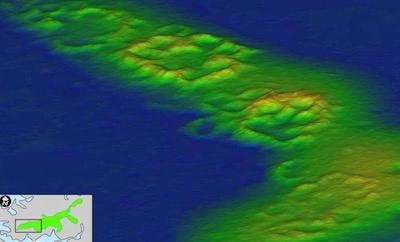
Using drone technology, a team of UF researchers has uncovered how an ancient Florida village played a pivotal role in pre-Columbian geopolitics.

In research led by anthropology Ph.D. student Terry Barbour, the team discovered that the settlement on Raleigh Island, located on the northern Gulf coast of Florida around 900–1200 AD, operated as a major producer of beads made from seashells. The beads, used in rituals at the time, were highly prized in communities as far from the coast as the lower Midwest.

"In form, scale and purpose, the Raleigh Island settlement has no parallel in the archaeological record of the American Southeast," said Ken Sassaman, Barbour's advisor and the co-creator of the study. Sassaman is the Hyatt and Cici Brown Professor of Florida Archaeology in the Department of Anthropology.

The researchers used drones to survey the ancient settlement in a fraction of the time traditional methods would have taken. Working with UF partners at the GatorEye Unmanned Flying Laboratory, the team equipped the drone with Light Detection and Ranging (LiDAR) scanners that quickly collected architectural details and topographic data with unprecedented resolution.

The LiDAR shed light on how the settlement—a complex of at least 37 residential spaces surrounded by 4-meter-tall ridges of oyster shells—was organized to make beads in the very place where shells were found. In several of the living spaces, the researchers' excavations uncovered ample evidence of large-scale bead production.

The Raleigh Island settlement is one of the few coastal communities where such extensive craft production has been found.

"What we have here is a settlement at the source of this raw material at the time when marine shell was starting to become a heavily demanded social item," Barbour said. "The fact we have strong evidence of bead manufacture at a site with equally impressive architecture to guide us in understanding how production was organized socially makes this place really special, and as of now the only place like it we are aware of."

The findings have been published in Proceedings of the National Academy of Sciences.

(Image provided with University of Florida news release)

FMI: www.ufl.edu

Advertisement

More News

ANN's Daily Aero-Term (11.29.25): Waypoint

Waypoint A predetermined geographical position used for route/instrument approach definition, progress reports, published VFR routes, visual reporting points or points for transiti>[...]

ANN's Daily Aero-Linx (11.29.25)

Aero Linx: Sentimental Journey to Cub Haven Sentimental Journey Flyin began in 1986 with a group of dedicated volunteers working to provide a sentimental return to Lock Haven, the >[...]

NTSB Prelim: Jabiru USA Sport Aircraft LLC J230-SP

The Pilot Would Often Fly Over Their House At A Low Altitude And That Family Members Would Go Outside To Wave On November 14, 2025, at 1708 eastern standard time, a Jabiru USA Spor>[...]

Classic Aero-TV: Crafting The Future of eVTOL Infrastructure

From 2024 (YouTube Edition): Volatus Infrastructure Paves The Way The name “Volatus” seems to be everywhere these days, popping up in a series of partnerships and proje>[...]

Klyde Morris (11.28.25)

Fortnite Conquers All, Klyde FMI: www.klydemorris.com>[...]

blog comments powered by Disqus



Advertisement

Advertisement

Podcasts

Advertisement

© 2007 - 2025 Web Development & Design by Pauli Systems, LC

