
Drone In Reported Near Collision With A Glider In England | Aero-News Network
Aero-News Network
RSS icon RSS feed
podcast icon MP3 podcast
Subscribe Aero-News e-mail Newsletter Subscribe

Airborne Unlimited -- Most Recent Daily Episodes

Episode Date

Airborne-Monday

Airborne-Tuesday

Airborne-Wednesday Airborne-Thursday

Airborne-Friday

Airborne On YouTube

Airborne-Unlimited-12.08.25

AirborneNextGen-
12.09.25

Airborne-Unlimited-12.10.25

Airborne-AffordableFlyers-12.11.25

AirborneUnlimited-12.05.25

AFE 2025 LIVE MOSAIC Town Hall (Archived): www.airborne-live.net

Thu, Mar 01, 2018

Drone In Reported Near Collision With A Glider In England

Two Aircraft Missed Colliding By About 15 Feet, Authorities Say

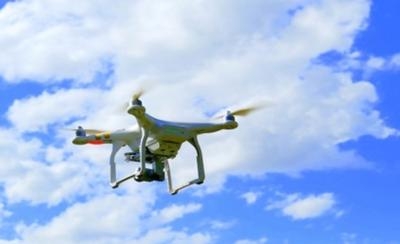
A drone being flown in the area around Dunstable airport northwest of London nearly collided with a glider on approach to the airport, according to the U.K. Airprox board.

According to the report, the pilot of an ASK21 glider told the board that he was performing a standard circuit at Dunstable. The weather was grey and overcast with a rain front approaching from the west. A drone was encountered at 550ft just prior to the final turn for approach. The drone was 20-50 meters (65-165 feet) in front of the nose of the glider and a few meters below. It was grey in colour and therefore difficult to see in the overcast weather against a backdrop of Dunstable town. It passed rapidly to the right of the glider, remaining a few meters below; there was no time to take avoiding action. Had the drone been on a collision course it was unlikely that the glider would have responded to control inputs rapidly enough to allow avoiding action to be effective.

The board determined that the drone was being flown in the vicinity of an airfield circuit such that it was endangering other aircraft at that location and altitude. The Board agreed that the incident was therefore best described as the drone was flown into conflict with the glider. The two aircraft came within 15 feet of colliding, according to the board's report.

The Board considered that the pilot’s estimate of separation, allied to his overall account of the incident and his inability to avoid the drone portrayed a situation where providence had played a major part in the incident and/or a definite risk of collision had existed. The board said that the risk of collision in this incident was "High".

(Source: Airprox Board. Image from file)

FMI: www.airproxboard.org.uk/Reports-and-analysis/Monthly-summaries/2018/Monthly-Meeting-January-2018/

Advertisement

More News

Aero-News: Quote of the Day (12.09.25)

“We respectfully call on the City of Mesa to: 1. Withdraw the landing fee proposal immediately 2. Engage with the aviation community before making decisions that impact safet>[...]

ANN's Daily Aero-Term (12.09.25): High Speed Taxiway

High Speed Taxiway A long radius taxiway designed and provided with lighting or marking to define the path of aircraft, traveling at high speed (up to 60 knots), from the runway ce>[...]

ANN's Daily Aero-Linx (12.09.25)

Aero Linx: International Federation of Airworthiness (IFA) IFA uniquely combines together all those with responsibility for policies, principles and practices concerned with the co>[...]

NTSB Final Report: Diamond Aircraft Ind Inc DA20C1 (A1); Robinson Helicopter R44

Controller’s Expectation That VW02 Would Have Departed Sooner Led To An Inadequate Scan And Loss Of Situational Awareness Analysis: A Robinson R-44 helicopter N744AF, VW02 (V>[...]

ANN FAQ: Q&A 101

A Few Questions AND Answers To Help You Get MORE Out of ANN! 1) I forgot my password. How do I find it? 1) Easy... click here and give us your e-mail address--we'll send it to you >[...]

blog comments powered by Disqus



Advertisement

Advertisement

Podcasts

Advertisement

© 2007 - 2025 Web Development & Design by Pauli Systems, LC

