
Airmen Missing From WWII Being Returned To U.S. | Aero-News Network
Aero-News Network
RSS icon RSS feed
podcast icon MP3 podcast
Subscribe Aero-News e-mail Newsletter Subscribe

Airborne Unlimited -- Most Recent Daily Episodes

Episode Date

Airborne-Monday

Airborne-Tuesday

Airborne-Wednesday Airborne-Thursday

Airborne-Friday

Airborne On YouTube

Airborne-Unlimited-11.24.25

AirborneNextGen-
11.18.25

Airborne-Unlimited-11.19.25

Airborne-AffordableFlyers-11.20.25

AirborneUnlimited-11.21.25

LIVE MOSAIC Town Hall (Archived): www.airborne-live.net

Thu, Oct 16, 2014

Airmen Missing From WWII Being Returned To U.S.

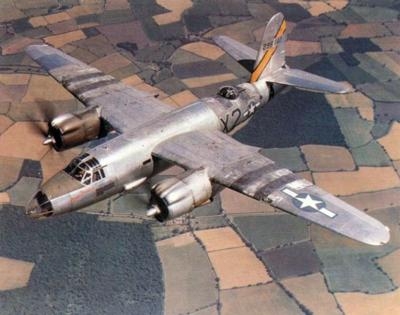
Crew Of B-26G Marauder Shot Down Near Seffern, Germany In 1944

Three U.S. servicemen, missing from World War II, have been accounted for and their remains are being returned to their families for burial with full military honors.

Army Air Forces 1st Lt. William P. Cook, 27, of Alameda, CA, Staff Sgt. Maurice J. Fevold, 21, of Chicago, IL, and Sgt. Eric M. Honeyman, 21, of Alameda, CA, have been accounted for and will be buried with full military honors.

On Dec. 23, 1944, Cook along with five other B-26G Marauder crew members took off from Saint Quentin, France, on a mission to bomb an enemy-held bridge in Eller, Germany. The aircraft was shot down by enemy anti-aircraft fire near Seffern, Germany, near the border with Belgium.

Following World War II, the Army Graves Registration Command (AGRC) conducted extensive field investigations and was unable to locate the aircraft and the crew. In May 1949, AGRC concluded the crew members were unrecoverable.

In 2006, a group of aviation researchers located the wreckage of a B-26G near Allmuthen, Belgium and notified the U.S. Army Mortuary Affairs Activity – Europe. In 2007, a Joint POW/MIA Accounting Command (JPAC) team investigated the site and recommended it for excavation.

In 2012 and 2013, JPAC teams excavated the crash site and recovered human remains and non-biological material evidence.

To identify Cook’s remains, scientists from JPAC and the Armed Forces DNA Identification Laboratory (AFDIL) used circumstantial evidence and forensic identification tools, including, mitochondrial DNA, which matched Cook’s maternal-line cousins.

To identify Fevold’s remains scientists from JPAC and the Armed Forces DNA Identification Laboratory (AFDIL) used circumstantial evidence and forensic identification tools, including, mitochondrial DNA, which matched Fevold’s maternal-line niece.

Fevold will be buried Oct. 20 in Badger, Iowa and Cook will be buried Oct. 25 in Oakland, CA. Honeyman will be buried at a future date still
to be determined.

(Image from file)

FMI: www.dtic.mil

Advertisement

More News

Classic Aero-TV: Extra; the Airplane, the Man, and His Grand DeLand Plan

From 2023 (YouTube Edition): Germany’s Best by Way of Florida Established in 1980 by German aerobatic pilot Walter Extra as a means by which to design and develop his own air>[...]

ANN FAQ: Follow Us On Instagram!

Get The Latest in Aviation News NOW on Instagram Are you on Instagram yet? It's been around for a few years, quietly picking up traction mostly thanks to everybody's new obsession >[...]

Aero-News: Quote of the Day (11.27.25)

“Achieving PMA for the S-1200 Series magnetos is another step in expanding our commitment to providing the aviation community with the most trusted and durable ‘firewal>[...]

ANN's Daily Aero-Term (11.27.25): Ultralight Vehicle

Ultralight Vehicle A single-occupant aeronautical vehicle operated for sport or recreational purposes which does not require FAA registration, an airworthiness certificate, or pilo>[...]

ANN's Daily Aero-Linx (11.27.25)

Aero Linx: The de Havilland Moth Club Ltd The de Havilland Moth Club evolved from a belief that an association of owners and operators of Moth aeroplanes should be formed to create>[...]

blog comments powered by Disqus



Advertisement

Advertisement

Podcasts

Advertisement

© 2007 - 2025 Web Development & Design by Pauli Systems, LC

