Plane Fell Over 200 Feet Within Seconds Before Impact
 The National Transportation Safety
Board has issued its preliminary report on the November 13 downing
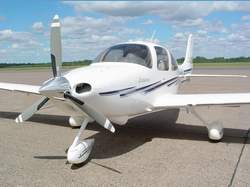
of a Cirrus SR22 in Tallahassee, FL.
As ANN reported, the two persons onboard the
aircraft were killed when the plane impacted a residential
neighborhood two miles from Tallahassee Regional Airport (TLH)
while on an instrument approach to the airport; three persons on
the ground were also injured.
The National Transportation Safety
Board has issued its preliminary report on the November 13 downing
of a Cirrus SR22 in Tallahassee, FL.
As ANN reported, the two persons onboard the
aircraft were killed when the plane impacted a residential
neighborhood two miles from Tallahassee Regional Airport (TLH)
while on an instrument approach to the airport; three persons on
the ground were also injured.
The prelim clarifies statements made in the FAA's initial
report... and paints a disturbing picture of the final seconds of
the accident flight. According to data obtained by investigators,
the aircraft plummeted 230 feet in five seconds before impact:
"A hand held GPS (global positioning
system) unit that was recovered from the airplane was downloaded at
the Safety Board," the prelim states. "When the positions were
plotted over the inbound course, they revealed that the airplane
initially joined the localizer, before veering off to the right
about 5 nautical miles (nm) from the airport. The airplane then
flew a serpentine pattern for the next 2 miles, finally turning
south before the GPS stopped recording.
"The last recorded position was almost
directly above the accident site, and indicated that the airplane
was 30 feet above the ground. The previous recorded position, 5
seconds earlier, was about .07 miles to the north, and indicated
the airplane was 260 feet above the ground."
As referenced in the statement above, the accident aircraft
repeatedly deviated from the localizer as it approached TLH. The
NTSB notes a 6-knot wind blowing from the south at TLH, which may
have contributed to the plane veering
right-of-course:
"A review of voice transmissions
revealed that as he was approaching Tallahassee, the pilot advised
the controller that he had the current weather, and requested the
ILS (instrument landing system) runway 27 approach. The approach
controller provided vectors for the approach, cleared the pilot for
the approach, and advised him to switch to the Tallahassee Tower
radio frequency, which the pilot acknowledged...
 "After the pilot contacted
Tallahassee Tower, the controller cleared him to land, and reported
the winds from 170 degrees at 6 knots. About 1 minute, 20 seconds
later, the controller advised the pilot that he was right of
course, and to fly heading 240 to rejoin the localizer. The pilot
did not initially respond, and the controller repeated the
instruction, after which, the pilot acknowledged.
"After the pilot contacted
Tallahassee Tower, the controller cleared him to land, and reported
the winds from 170 degrees at 6 knots. About 1 minute, 20 seconds
later, the controller advised the pilot that he was right of
course, and to fly heading 240 to rejoin the localizer. The pilot
did not initially respond, and the controller repeated the
instruction, after which, the pilot acknowledged.
"About 20 seconds later, the
controller twice told the pilot to turn left to heading 240, once
also stating that the pilot was heading north-westbound, which the
pilot acknowledged. About 1 minute after that, the controller again
directed the pilot to turn left to 240, and advised him that he was
still right of course. The pilot did not initially respond, but
when the controller repeated the airplane's call sign, the pilot
stated, "seven golf mike's gotta go..."
"There were no further transmissions
from the pilot."
A witness told the Board she saw the SR22 was flying
straight overhead, before it "'came down flipping in circles,'
including two 360-degree turns, and hit the cars, one of which then
ran over her."
The 64-year-old pilot held a private certificate with
single-engine land and instrument ratings, and had purchased the
SR22 in early October. In 721 hours of total time, he held 17 hours
in make and model. The 2002 Cirrus was equipped with steam-gauge
primary instruments, and a multi-function display configured to
record flight data; however, the MFD did not record the last 63
seconds of the accident flight.
Investigators noted the aircraft's CAPS ballistic parachute
system was safed at the time of impact, with the maintenance safety
pin still inserted through the handle retainer and the accompanying
"Remove Before Flight" streamer attached.



 Airbus Racer Helicopter Demonstrator First Flight Part of Clean Sky 2 Initiative
 See All