Airstrips Provide Low-Impact Access To Natural Areas
 Following years of work and discussions, Abigail Kimbell,
Chief of the U. S. Forest Service, has signed a directive
acknowledging the long and proud history of aviation use and
airstrips on forest service lands, and asked USFS managers at all
levels to inventory and maintain existing facilities, and to
support aviation as an important recreational activity.
Following years of work and discussions, Abigail Kimbell,
Chief of the U. S. Forest Service, has signed a directive
acknowledging the long and proud history of aviation use and
airstrips on forest service lands, and asked USFS managers at all
levels to inventory and maintain existing facilities, and to
support aviation as an important recreational activity.
This action resulted from meetings between representatives of
the Recreational Aviation Foundation and a team of senior Forest
Service executives in Washington. Similar to policy statements
regarding many other classes of the public and user groups such as
hikers, fishermen, and boaters, the memorandum says:
“Aviation has been part of our country's heritage, both as a
mode of transportation and as a means of access to remote and
scenic areas for a wide variety of purposes. Backcountry airstrips
are an appropriate use of National Forest System (NFS) lands as
they provide enhanced access for a variety of legitimate
recreational activities ... Recreational aircraft and backcountry
airstrips can be an integral part of a balanced and efficient
transportation system.”
From the earliest days of aviation a system of backcountry
airstrips has served the forest service and its users, providing
support for forest managers, fire crews, and medical evacuation
aircraft. And countless backpackers, campers, boaters, and
fishermen have used them to gain access to remote parts of the
forest. Unlike other recreational facilities requiring hundreds of
miles of roadways, airstrips require minimal disturbance of the
natural landscape, while serving as internal trailheads for remote
areas. Airplanes do not have driven wheels so they do not churn up
fragile landscapes the way other vehicles do. They are considered a
low-impact use. In addition the document notes the importance of
existing and future mutually beneficial relationships with aviation
groups, similar to those with other groups. It says
“Operation and maintenance of airstrips may provide
opportunities for cooperative relationships under Challenge-Cost
Share and other authorities.
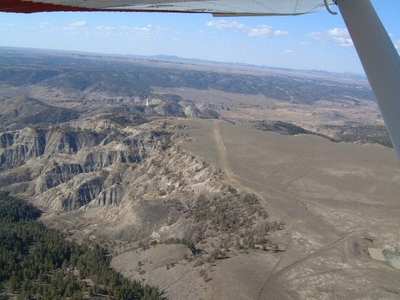
The recreation pilot communities are significantly engaged in
providing funding, human resources, expertise, and equipment for
backcountry airstrips on NFS lands. ... The use of volunteers in
joint development of Russian Flat public airstrip on the Judith
Ranger District, Lewis and Clark National Forest in Montana is an
excellent example of cooperative development.” John McKenna,
President of the Recreation Aviation Foundation, notes:
“After many years of discussion we here at the RAF are very
pleased to have a good working relationship with the USFS. The USFS
has worked hard to better understand the desires and uses of the
aviation community, and this document communicates that
understanding. We look forward to building on the partnership and
the trust this document brings forth.”

The Recreational Aviation Foundation, devoted to the
perpetuation and improvement of recreational aviation opportunities
on both public and private lands, congratulated the Forest Service
for its recognition of aviation’s importance, and also
acknowledged the contributions of dozens of state, local, and other
aviation groups in building and maintaining strong relationships
with land management agencies, creating the foundation for a strong
system of backcountry airstrips.



 Aero-News: Quote of the Day (12.11.25)


 See All