
Brazilian AF Concludes Switched-Off Transponder To Blame In 2006 Mid-Air | Aero-News Network
Aero-News Network
RSS icon RSS feed
podcast icon MP3 podcast
Subscribe Aero-News e-mail Newsletter Subscribe

Airborne Unlimited -- Most Recent Daily Episodes

Episode Date

Airborne-Monday

Airborne-Tuesday

Airborne-Wednesday Airborne-Thursday

Airborne-Friday

Airborne On YouTube

Airborne-SpecialEpisode-12.15.25

AirborneNextGen-
12.16.25

Airborne-Unlimited-12.10.25

Airborne-AffordableFlyers-12.11.25

AirborneUnlimited-12.12.25

AFE 2025 LIVE MOSAIC Town Hall (Archived): www.airborne-live.net

Mon, Dec 08, 2008

Brazilian AF Concludes Switched-Off Transponder To Blame In 2006 Mid-Air

Four Flight Controllers Also Found At Fault

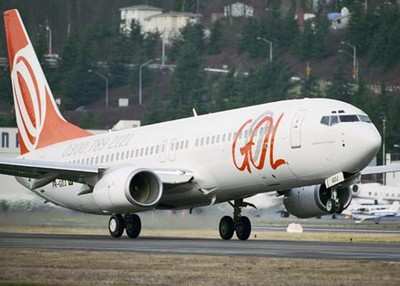
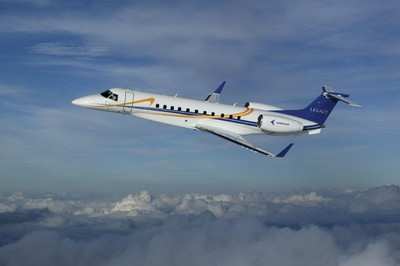
Sao Paulo newspapers reported Saturday that the Brazilian Air Force investigation into the September 29, 2006 mid-air collision of a Gol Airlines 737 and an Embraer Legacy 600 has determined the probable cause of the accident.

In a formal report slated to be released Wednesday, the Estado de Sao Paulo and Folha de Sao Paulo newspapers said Air Force investigators put much of the blame squarely on the two American pilots of the Embraer, stating they had inadvertently switched their transponder to standby mode.

Also contributing to the incident were the actions of four flight controllers who failed to notice the transponder was turned off and failed to warn the pilots of their collision course, the Air Force said.

As ANN reported, the mid-air collision of Gol flight 1907 and the Embraer Legacy 600 resulted in the deaths of all 154 persons aboard the 737, while the Embraer landed safely.

ExcelAire pilots Joseph Lepore and Jan Paladino and the four controllers have been indicted on involuntary manslaughter charges. If convicted, they could face up to three years in prison, the Associated Press reported.

Responding to the ruling in a phone interview Saturday, David Rimmer, ExcelAire's executive vice president, said, "The transponder issue is a distraction from the true cause of the accident, which is an air traffic control system that put two airplanes on a collision course for about an hour."

Rimmer complained that the Air Force investigation "relied on theories rather than conducting in-depth testing of the equipment. We have no proof of how the transponder was turned off and no evidence to suggest it was inadvertently turned off by the pilots," he said.

Similar to US National Transportation Safety Board investigations, Brazilian Air Force investigations determine causes and recommend measures to avoid future accidents.

FMI: www.voegol.com.br/, www.excelaire.com

Advertisement

More News

Aero-News: Quote of the Day (12.18.25)

“These new aircraft strengthen our ability to respond quickly, train effectively and support communities nationwide. Textron Aviation has been a steadfast supporter in helpin>[...]

Classic Aero-TV: Viking Twin Otter 400--Bringing the DHC-6 Back Into Production

From 2011 (YouTube Edition): Rugged, Legendary, STOL Twin Makes A Comeback The de Havilland Twin Otter is an airplane with a long history, and it gained a reputation as a workhorse>[...]

NTSB Final Report: Rans Employee Flying Club Rans S-6ES Coyote II

A Wind Gust Lifted The Right Wing And The Airplane Turned To The Left Analysis: The pilot was departing from a 2,395-ft-long by 50-ft-wide turf runway. The pilot reported that afte>[...]

ANN FAQ: Submit a News Story!

Have A Story That NEEDS To Be Featured On Aero-News? Here’s How To Submit A Story To Our Team Some of the greatest new stories ANN has ever covered have been submitted by our>[...]

ANN's Daily Aero-Term (12.18.25): Braking Action Advisories

Braking Action Advisories When tower controllers receive runway braking action reports which include the terms “medium," “poor," or “nil," or whenever weather con>[...]

blog comments powered by Disqus



Advertisement

Advertisement

Podcasts

Advertisement

© 2007 - 2025 Web Development & Design by Pauli Systems, LC

