Wed, Sep 28, 2016
Pilot Peter Zaccagnino Was Uninjured In The Incident During A Race
The NTSB has released a preliminary report from its investigation into an incident at the Reno National Championship Air Races September 16th.
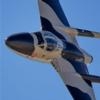
According to the report, the Dehavilland DH115 Vampire, N4861K, flown by Peter Zaccagnino sustained substantial damage during an off airport landing near the Reno-Stead Airport (RTS), Reno, Nevada. The airplane was registered to CB Aviation Inc., Ogden, Utah, and operated by the pilot under the provisions of Title 14 Code of Federal Regulations Part 91. The airline transport pilot, sole occupant of the airplane, was not injured. Visual meteorological conditions prevailed and no flight plan was filed for the local air race flight, which originated from RTS about 9 minutes prior to the accident.
The pilot reported that he was participating in a Jet Class Gold Race at the National Championship Air Races, which consisted of 6 laps around a closed race course. About 3.5 laps into the race, the pilot heard a loud bang followed by wind noise and wind within the cockpit. The pilot immediately aborted the race, pitched up, and began to slowly reduce power, trading airspeed for altitude. The pilot said he assessed all primary flight controls and trim, noting no anomalies, however, noticed a crack in the right side of the canopy. In addition, the pilot noted throughout the climb and orbit that all engine gauges displayed a normal indication as he set up for landing on runway 8. The pilot further stated that he attempted two separate engine restart procedures, with no success. The pilot said he was unable to reach runway 14 or runway 8, and elected to land in the open desert north of the airport. Subsequently, the pilot initiated a forced landing with the landing gear and flaps in the retracted
position. As the airplane descended through about 80 feet above ground level, the pilot turned off the fuel and all switches in preparation of the off airport landing.
Examination of the accident site revealed that the airplane came to rest up right about 7,741 feet north, northwest of the approach end of runway 8. The wreckage debris path was oriented on a heading of about 345 degrees and was about 756 feet in length. Portions of plexi glass from the airplane's canopy structure were located about 1.57 miles southwest of the accident site. The wreckage was recovered to a secure location for further examination.
(Image from Facebook)
More News
Ultrahigh Frequency (UHF) The frequency band between 300 and 3,000 MHz. The bank of radio frequencies used for military air/ground voice communications. In some instances this may >[...]
During The 7 Second Descent, There Was Another TAWS Alert At Which Time The Engine Remained At Full Power On October 24, 2025 at 2115 mountain daylight time, a Cirrus SR22T, N740TS>[...]
From 2009 (YouTube Edition): Educational Organization Aims to Inspire by Sharing Tuskegee Story Founding leader Don Hinz summarized the Red Tail Project’s mission in simple, >[...]
“This feels like an important step since space travel for people with disabilities is still in its very early days... I’m so thankful and hope it inspires a change in m>[...]
Also: New Katanas, Kern County FD Training, IndiGo’s Botched Roster, MGen. Leavitt Named ERAU Dean The Australian Transportation Safety Bureau (ATSB) has wrapped up its inves>[...]



 ANN's Daily Aero-Term (12.19.25): Ultrahigh Frequency (UHF)


 See All