
U.S. Military Asks Japan To Prevent Drone Overflights Of Bases | Aero-News Network
Aero-News Network
RSS icon RSS feed
podcast icon MP3 podcast
Subscribe Aero-News e-mail Newsletter Subscribe

Airborne Unlimited -- Most Recent Daily Episodes

Episode Date

Airborne-Monday

Airborne-Tuesday

Airborne-Wednesday Airborne-Thursday

Airborne-Friday

Airborne On YouTube

Airborne-Unlimited-12.01.25

AirborneNextGen-
12.02.25

Airborne-Unlimited-11.19.25

Airborne-AffordableFlyers-11.20.25

AirborneUnlimited-11.21.25

LIVE MOSAIC Town Hall (Archived): www.airborne-live.net

Tue, Jan 02, 2018

U.S. Military Asks Japan To Prevent Drone Overflights Of Bases

Says The Aircraft Pose Safety And Security Risks

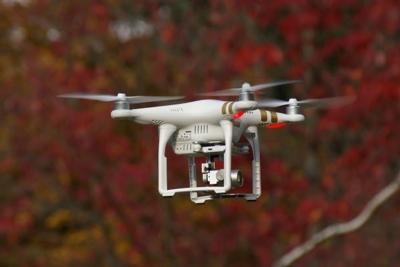
The U.S. military has formally asked Japan to stop people from flying over its bases using drones, citing safety and security concerns.

Stars and Stripes relays a report from the Asahi newspaper that says during a meeting with Japanese Defense Minister Itsunori Onodera in November, Adm. Harry Harris, head of U.S Pacific Command requested the action.

Air Force Col. John Hutcheson, a U.S. Forces Japan spokesman, told Stars and Stripes that drones have been seen operating in the vicinity of Camp Schwab, a Marine Corps facility on Okinawa. He said that it doesn't happen every day, "but it’s frequent enough to be a significant concern. “Oftentimes we can see the people flying [drones] but they are off the grounds of the installation."

Asahi reports that Adm. Harris said that there is a risk of a drone colliding with a military aircraft. In one incident, a helicopter had to turn sharply to avoid hitting a UAV, according to the paper.

Japanese law prevents drones from being flown near their own government buildings and facilities, but do not preclude such flights near U.S. installations. At Harris' request, the Japanese government is reportedly considering whether to expand its law to cover U.S bases.

In April, the FAA issued a ban of drone flights over military bases in the U.S.

(Image from file)

FMI: Original Report

Advertisement

More News

ANN's Daily Aero-Term (12.01.25): Convective SIGMET

Convective SIGMET A weather advisory concerning convective weather significant to the safety of all aircraft. Convective SIGMETs are issued for tornadoes, lines of thunderstorms, e>[...]

ANN's Daily Aero-Linx (12.01.25)

Aero Linx: United Flying Octogenarians WELCOME to a most extraordinary group of aviators, the United Flying Octogenarians (UFO). Founded in 1982 with just a handful of pilots, we h>[...]

NTSB Final Report: Remos Aircraft GmbH Remos GX

Pilot’s Decision To Attempt Takeoff With Frost Covering The Airplane’s Wings Analysis: The pilot of the light sport airplane was preparing to depart for a cross-country>[...]

Aero-News: Quote of the Day (12.02.25)

“We’ve paid for the cable line’s repair for the customer and have apologized for the inconvenience this caused them...” Source: Some followup info from an A>[...]

ANN's Daily Aero-Term (12.02.25): Coupled Approach

Coupled Approach An instrument approach performed by the aircraft autopilot, and/or visually depicted on the flight director, which is receiving position information and/or steerin>[...]

blog comments powered by Disqus



Advertisement

Advertisement

Podcasts

Advertisement

© 2007 - 2025 Web Development & Design by Pauli Systems, LC

