
Memphis RECAT Significantly Increases Airport Capacity | Aero-News Network
Aero-News Network
RSS icon RSS feed
podcast icon MP3 podcast
Subscribe Aero-News e-mail Newsletter Subscribe

** AIRBORNE 05.24.13 Aero-TV-- CLICK HERE! ** HD iPad-Friendly Version -- AIRBORNE 05.24.13 **

** AIRBORNE 05.21.13 Aero-TV-- CLICK HERE! ** HD iPad-Friendly Version -- AIRBORNE 05.21.13 **

** AIRBORNE 04.01.13 SPECIAL EDITION of Aero-TV-- CLICK HERE! ** HD iPad-Friendly Version -- AIRBORNE 04.01.13 SPECIAL EDITION **

Fri, Feb 01, 2013

Memphis RECAT Significantly Increases Airport Capacity

Adds Sixth Wake Turbulence Category Based On Multiple Criteria

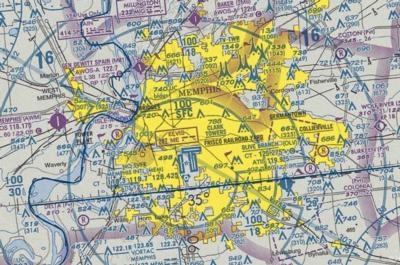
Capacity at Memphis International Airport has increased significantly since the FAA revised wake turbulence separation standards. Memphis Tower and TRACON were the first facilities to apply the new standards on Nov. 1, 2012.

The re-categorization of separation standards (RECAT) resulted from a decade of collaboration between the FAA, DOT/Volpe National Transportation System Center, EUROCONTROL and the aviation industry. Experts in wake turbulence, and safety and risk analysis determined that decreasing separation between similar type aircraft is as safe, or safer than current standards and increases efficiency and capacity. RECAT is the latest example of how the Next Generation Air Transportation System is transforming the air traffic control system. NextGen enhances safety, reduces delays, saves fuel and reduces aviation’s environmental impact.

Wake turbulence forms behind an aircraft as it passes through the air. In certain cases, the wake turbulence generated by large aircraft can be hazardous for aircraft passing behind. This turbulence has been known to cause smaller planes to roll or flip over without warning. The FAA previously used five wake turbulence separation categories based primarily on aircraft weight. The RECAT initiative resulted in six categories, based on weight, approach speeds, and wing characteristics. The categories are labeled A to F, with Category A including very large aircraft such as the Airbus A380 and Category F including smaller planes such as the Cessna Citation and Embraer 120.

FedEx is the largest carrier at Memphis, with about 500 operations a day. Most FedEx aircraft are in Category C, including the MD-11, B767, and A300 series aircraft. Because they are in the same category,  these aircraft can now be separated by 2.5 to three nautical miles instead of the previously required four nautical miles.

Closer spacing enables FedEx aircraft to be cleared for takeoff with less separation from the previous departure off the same runway. Previously, controllers were required to wait until a departure  was several miles from the end of the runway before clearing a second aircraft for takeoff. This reduces by five minutes, under certain runway configurations, the time FedEx aircraft spend in airspace controlled by Memphis TRACON. As a result of the change, FedEx aircraft may now proceed directly from the gate to the runway, cutting average taxi time by three minutes. The FAA estimates a more than 15 percent increase in capacity at Memphis as a result of RECAT. Overall, the FAA can accommodate nine additional flights per hour using the new separation standards. Lower fuel consumption and fewer emissions are added benefits of this newly gained efficiency.

The FAA plans to expand the new standards to other airports in 2013 and 2014, and estimates an average capacity increase of 7 percent. Capacity increases at each airport will depend on the mix of aircraft categories operating at that airport.

FMI: www.faa.gov/other_visit/aviation_industry/airline_operators/airline_safety/safo/all_safos/media
 

Advertisement

More News

ANN's Daily Aero-Linx (05.25.13)

Three-Eight Charlie If you know the name of the first woman to fly solo around the world, you’re ahead of most people. By the way, if you thought it was Amelia Earhart, you&r>[...]

ANN's Daily Aero-Term (05.25.13): Holding Pattern

Holding pattern. A racetrack pattern, involving two turns and two legs, used to keep an aircraft within a prescribed airspace with respect to a geographic fix.>[...]

Aero-News: Quote Of The Day (05.25.13)

“We need a world-class system of weather prediction in the United States – one, as the National Academy of Sciences recently put it, that is ‘second to none'." So>[...]

ANN FAQ: Share Aero-News With Your Friends

Send Them A Story -- We Don't Mind! Do you need another set of eyes to see that story you can't believe Jim just wrote? Want to spread Hognose's unique wisdom and perspective to th>[...]

Flight Attendant Union Endorses Ed Markey For U.S. Senate

Cites 'Strong Record On Aviation Security' The Association of Flight Attendants-CWA (AFA) has endorsed Congressman Ed Markey for the U.S. Senate, specifically noting his proven rec>[...]

blog comments powered by Disqus



Advertisement

Advertisement

Podcasts

Advertisement

© 2007 - 2013 Web Development & Design by Pauli Systems, LC