Says USAF Has 180 Fixes Already Underway
 A Defense Department task force has recommended the Air Force
Space Command be re-designated as Air Force Strategic Command and
be home to the service's nuclear mission.
A Defense Department task force has recommended the Air Force
Space Command be re-designated as Air Force Strategic Command and
be home to the service's nuclear mission.
Former Defense Secretary James Schlesinger briefed the press on
the task force's conclusions during a Pentagon news conference
today.
The new command would be a major command and entail all of the
service's assets from missiles to bombers. Known as the Schlesinger
Panel, the task force came into being as a result of revelations
that the Air Force mistakenly had sent nuclear missile components
to Taiwan in 2006,
and inadvertently had flown nuclear weapons
from Minot Air Force Base, ND to Barksdale Air Force Base, LA in
2007.
As a result Defense Secretary Robert M. Gates asked Schlesinger
to look into ways to fix the situation. A previous report authored
by Navy Adm. Kirkwood Donald said the Air Force culture needed to
be changed to stress the importance of the nuclear mission.
For his part, Schlesinger gave a short history lesson to frame
the problem. "The nuclear mission has altered substantially since
the days of the Cold War," he said.
During the Cold War, the NATO allies were fearful that the
Warsaw Pact countries held a conventional force advantage over the
Western allies. The nuclear umbrella America provided deterred the
Soviet Union and its allies from attacking.
"That mission has gone by the boards," Schlesinger said. "The
nuclear deterrent role today is quite different, and it is much
more circumscribed than it was in the days of the Cold War.
However, it is no less important, despite the fact that the domain
of the nuclear mission has shrunk."
By treaty, the United States still holds the nuclear umbrella
over the NATO countries, Japan, Korea, Australia and New Zealand.
"The confidence that they have in that umbrella will determine
whether or not they themselves may seek to acquire nuclear
weapons," Schlesinger said. "Some (nations) have expressed
increasing misgivings about whether or not they feel comfortable
under the umbrella.
Part of the Air Force and Defense Department task is to
"resuscitate their confidence in the credibility of the nuclear
umbrella," he said.
The service has to change its culture, the former secretary
said, because Air Force interest in the nuclear mission has
atrophied. "This goes back to the disestablishment of the Strategic
Air Command in 1991," he said.
SAC, as it was called, was a specified command reporting
directly to the defense secretary. It was the home of the Air Force
legs of the strategic triad: the intercontinental ballistic
missiles and nuclear-capable bombers. In 1991, the command split
with the missiles going to Air Force Space Command and the bombers
to Air Combat Command.
Both commands had other priorities and, the nuclear mission lost
money over the years. "As a result, the nuclear mission has been
underfunded and this has resulted in a shrinkage of billets for
units and even those shrunken billets remain unfilled in many
cases," Schlesinger said.
"There is a shortage of security personnel. There is a shortage
of maintenance people. There is a shortage of those who supervise
the nuclear establishment and there ... has been a very noticeable
lack of nuclear expertise," he said.
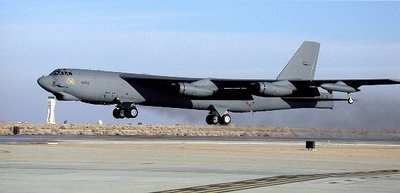
The Air Force has moved to change, Schlesinger said. Currently,
the service has 180 corrective actions in the works. "It is a
highly commendable response on the part of the Air Force," he said.
"It has established a solid basis for change, and all of the Air
Force leaders are saying the right things. The real question is
whether there will be follow through on what is now being
said."
(Aero-News thanks Jim Garamone, American Forces Press
Service)



 ANN's Daily Aero-Term (05.05.24): Omnidirectional Approach Lighting System
 See All