
Zipline Eyes Expansion Of Blood Delivery Services Into Tanzania | Aero-News Network
Aero-News Network
RSS icon RSS feed
podcast icon MP3 podcast
Subscribe Aero-News e-mail Newsletter Subscribe

Airborne Unlimited -- Most Recent Daily Episodes

Episode Date

Airborne-Monday

Airborne-Tuesday

Airborne-Wednesday Airborne-Thursday

Airborne-Friday

Airborne On YouTube

Airborne-Unlimited-12.01.25

AirborneNextGen-
11.18.25

Airborne-Unlimited-11.19.25

Airborne-AffordableFlyers-11.20.25

AirborneUnlimited-11.21.25

LIVE MOSAIC Town Hall (Archived): www.airborne-live.net

Sat, Sep 02, 2017

Zipline Eyes Expansion Of Blood Delivery Services Into Tanzania

Some Question Company's True Motives For The Move

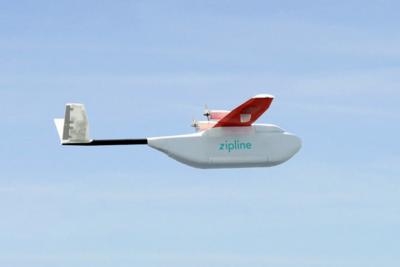
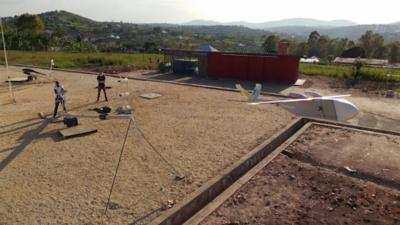
For much of the past year, Zipline, a U.S.-based robotics company, has been making deliveries of emergency blood supplies using fixed-wing drones. Payloads are dropped using a parachute, and the aircraft return to their home base before being recovered.

At a recent TEDGlobal conference, Keller Rinaudo, the CEO of the silicon valley-based company, said he has been discussing expanding the service with four distribution centers in Tanzania with the government there, according to a report from the BBC.

While Rinaudo said that he would like to establish a service to deliver a range of medical products to thousands of health centers in Tanzania, others have suggested that his ultimate goal is a drone delivery service in the U.S.

Last year, the U.K. Department for International Development promised funding for Zipline's African expansion. But according to the BBC, the World Bank said that the operations in Africa, while "doing wonders in terms of making drones real" there, is really being done to build a track record for the company to eventually offer a similar service in the U.S.

The deal with Tanzania, which has not yet been approved by the Tanzanian government, would be based on a pay-per-delivery model. Currently, the company charges between $15 and $45 per delivery based on distance, weight and urgency.

Rinaudo likened the charges to what would be expected if the deliveries were being made by car, and offered no apologies for a commercial model. He said one of the company's goals is to show that the challenge can be tackled "in an entrepreneurial way."

If approved in Tanzania, Zipline would open centers around the country over the next four years. Deliveries would include blood, vaccines and other medical supplies. It also hopes to expand its Rwandan service to include additional supplies. It currently seves 12 hospitals in Rwanda using a central distribution center.

(Images from file)

FMI: Original Report, flyzipline.com

Advertisement

More News

ANN's Daily Aero-Term (11.29.25): Waypoint

Waypoint A predetermined geographical position used for route/instrument approach definition, progress reports, published VFR routes, visual reporting points or points for transiti>[...]

ANN's Daily Aero-Linx (11.29.25)

Aero Linx: Sentimental Journey to Cub Haven Sentimental Journey Flyin began in 1986 with a group of dedicated volunteers working to provide a sentimental return to Lock Haven, the >[...]

NTSB Prelim: Jabiru USA Sport Aircraft LLC J230-SP

The Pilot Would Often Fly Over Their House At A Low Altitude And That Family Members Would Go Outside To Wave On November 14, 2025, at 1708 eastern standard time, a Jabiru USA Spor>[...]

Classic Aero-TV: Crafting The Future of eVTOL Infrastructure

From 2024 (YouTube Edition): Volatus Infrastructure Paves The Way The name “Volatus” seems to be everywhere these days, popping up in a series of partnerships and proje>[...]

Klyde Morris (11.28.25)

Fortnite Conquers All, Klyde FMI: www.klydemorris.com>[...]

blog comments powered by Disqus



Advertisement

Advertisement

Podcasts

Advertisement

© 2007 - 2025 Web Development & Design by Pauli Systems, LC

