Thu, Jul 02, 2015
Cites Main Rotor Belt On Amateur Built Helicopter Which Failed In 2003
The FAA has issued an InFO to inform operators and repair facilities of potential failures of Gates products that are not designed for aviation use and are currently being used in multiple aviation applications.
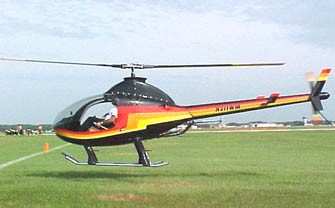
An experimental amateur built Rotorway Exec 162-F helicopter, suffered substantial damage following an emergency landing attempt in a field. During climb out, at approximately 300 feet altitude, the pilot heard a loud bang and experienced an immediate loss of power. The accident investigation and analysis determined that the main rotor belt experienced a crimp type failure. The aircraft was equipped with a cog belt drive system, which was installed in June of 2003 and a main drive belt which had 215.9 hours of operation at the time of the accident. The owner regularly conducted the required annual inspections of the aircraft and the pilot did not report any irregularities prior to the accident.
The main drive belt, manufactured by Gates, is a Poly Chain Belt with part number SMGT-1792-62. During the accident investigation, several documents were reviewed for the probable cause of failure.
The research identified the following:
- The Rotorway Exec 162-F Maintenance Manual states, "replace the main drive belts at 500 hours of operation, or at 5 years, or on condition, whichever comes first." While the belt did not reach its 500 hour recommended limit and the owner regularly conducted the proper annual inspections, the belt was far beyond the 5-year limit.
- The Gates catalog has an "Aircraft Policy" in the "Information and Glossary" section that states, "WARNING! BE SAFE! Do not use Gates belts, pulleys or sprockets on aircraft propeller or rotor drive systems or in-flight accessory drives. Gates products are not designed or intended for aircraft use."
- The Gates "Synchronous Belt Failure Analysis Guide" describes the type of belt failure as a "crimp" failure. The guide states, " ... belt crimping damage is most commonly associated with belt mishandling, inadequate belt installation tension, sub-minimal sprocket diameters, and/or entry of foreign objects within the belt drive." An inspection of the belt did not show evidence of damage to the belt due to foreign objects.
- During further research, the FAA says it has found similar belt failures with this type of aircraft and cog belt systems. The National Transportation Safety Board (NTSB) has a full narrative identifying one such accident on its website, refer to NTSB Identification: CEN14LA307.
Operators and repair facilities should familiarize themselves with the information contained within this InFO and with Gates Catalog Aircraft Policy in order to be aware of and reduce the risk of accidents caused by belts not intended for aircraft use. However, if Gates products are used, operators and repair facilities should be aware of main drive belt breaks on aircraft utilizing a hydraulic cog belt tensioner and the proper measurement of tension when the tensioner reaches the desired parameters and also adhere to the manufacturer's recommended life limits and inspection cycles.
(Rotorway Exec helicopter pictured in file photo. Not incident aircraft)
More News
Waypoint A predetermined geographical position used for route/instrument approach definition, progress reports, published VFR routes, visual reporting points or points for transiti>[...]
Aero Linx: Sentimental Journey to Cub Haven Sentimental Journey Flyin began in 1986 with a group of dedicated volunteers working to provide a sentimental return to Lock Haven, the >[...]
The Pilot Would Often Fly Over Their House At A Low Altitude And That Family Members Would Go Outside To Wave On November 14, 2025, at 1708 eastern standard time, a Jabiru USA Spor>[...]
From 2024 (YouTube Edition): Volatus Infrastructure Paves The Way The name “Volatus” seems to be everywhere these days, popping up in a series of partnerships and proje>[...]
Fortnite Conquers All, Klyde FMI: www.klydemorris.com>[...]



 ANN's Daily Aero-Term (11.29.25): Waypoint


 See All