Wed, Jan 02, 2019
Two People Fatally Injured In April, 2017 Accident In Missouri
The NTSB has released a probable cause report from an accident which occurred on April 24, 2017 in Booneville, MO. The commercial-rated pilot and a passenger were fatally injured when the Bellanca 17-31-ATC collided with high tension power lines and impacted terrain during final approach to land at the Jesse Viertel Memorial Airport (KVER).
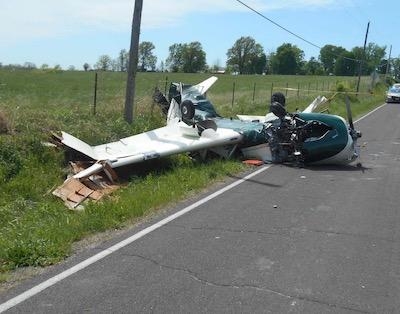
According to the report, the pilot was landing the airplane at the end of a personal local flight. The airport manager saw the airplane very low on final approach for runway 18. As the airplane continued toward the airport, it collided with power lines about 0.5 mile north of the runway's approach end. Weather conditions at the time of the accident included a clear sky with no obstructions to visibility. Examination of the airframe and engine did not reveal any anomalies that would have contributed to the accident. The pilot was familiar with the airport and was likely aware of the location of the power lines, which were well below a normal glideslope to the runway.
The pilot did not hold a medical certificate. An autopsy of the pilot revealed coronary artery disease and significant brain pathology. It is unlikely that the pilot's coronary artery disease contributed to the accident as it would not have impaired the pilot's judgment, vision, or decision-making. The pilot had scarring from a previous brain injury and severe damage to his left optic nerve to the extent that he was nearly blind in that eye. Given that the pilot failed to maintain proper altitude while operating in visual conditions and struck a potentially visible hazard, it is likely that his vision deficiency contributed to the accident.
Toxicology test results indicated that the pilot had used multiple psychoactive drugs before the accident, including cocaine, methamphetamine, clonazepam, and diphenhydramine. In addition to their psychoactive effects, these drugs are potent vasoconstrictors and can cause small arteries to spasm, cutting off blood flow to portions of vital organs. Although the neuropathologist who examined the pilot's brain believed the degree of cerebral hypoxic/ischemic damage he identified would take several hours to develop, the pilot was deceased by the time first responders arrived about 10 minutes after the witnessed crash. Therefore, this hypoxic/ischemic damage had to have begun before the accident and was likely caused by the pilot's misuse of cocaine and methamphetamine. This evolving brain ischemia may have played a role in the circumstances of the accident, but without specific information regarding the pilot's symptoms, its exact role cannot be determined. Although the pilot's stage of intoxication with
methamphetamine or cocaine at the time of the accident is unknown, it is very likely that he was impaired by the combined effects of these drugs.
The NTSB determined that the probable cause of the accident was the pilot's impairment, due to his use of a combination of psychoactive drugs and a vision deficiency in his left eye, which resulted in a failure to maintain adequate altitude during final approach to landing and subsequent collision with power lines.
(Image from NTSB accident docket)
More News
Waypoint A predetermined geographical position used for route/instrument approach definition, progress reports, published VFR routes, visual reporting points or points for transiti>[...]
Aero Linx: Sentimental Journey to Cub Haven Sentimental Journey Flyin began in 1986 with a group of dedicated volunteers working to provide a sentimental return to Lock Haven, the >[...]
The Pilot Would Often Fly Over Their House At A Low Altitude And That Family Members Would Go Outside To Wave On November 14, 2025, at 1708 eastern standard time, a Jabiru USA Spor>[...]
From 2024 (YouTube Edition): Volatus Infrastructure Paves The Way The name “Volatus” seems to be everywhere these days, popping up in a series of partnerships and proje>[...]
Fortnite Conquers All, Klyde FMI: www.klydemorris.com>[...]



 ANN's Daily Aero-Term (11.29.25): Waypoint


 See All