The Key Piece Of Technology To Be Showcased In The Challenge Is Called 'Safeguard'
Later this year, NASA’s Langley Research Center will host the Safeguard with Autonomous Navigation Demonstration (SAND) competition. SAND is an opportunity for American small businesses to compete in an autonomous unmanned aerial vehicle (UAV) competition to help NASA address safety-critical risks associated with flying UAVs in the national airspace.
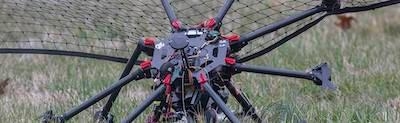
The key piece of technology to be showcased in the challenge is Safeguard.
Safeguard uses geo-fencing technology to create no-fly zones for any equipped UAV to assure it only operates in approved airspace. These zones can be custom mapped to protect critical infrastructure such as power lines, airports, schools or hospitals. Safeguard can also be used to establish flight ceilings to ensure a UAVs flight remains under its allowable maximum altitude.
Using these boundaries, Safeguard can alleviate the dangers of unmanned aircraft flying beyond their authorized perimeters by taking immediate action. In the event of a boundary violation, Safeguard can prompt a UAV to stop and find an alternate route, perform an emergency landing, and if all else fails cut the power completely to disable the vehicle.
The latter of those options is a bit risky to test. This didn’t stop the NASA researchers at Langley when it came time to put Safeguard to the ultimate test; allowing the UAV to cross a no-fly zone, terminating the flight from nearly 100ft in the air.
“The first thing we did was fly the UAV at an altitude of 30 meters and at a speed of 5 meters per second in a ‘search path’ with a geo-fence breach waypoint and Safeguard in bypass mode,” said Lou Glaab, assistant branch head for the Aeronautic Systems Engineering Branch in Langley's Engineering Directorate. “This was done to evaluate the vehicle and confirm that all systems were operating properly.”
The geo-fence breach waypoint means the researchers were intentionally telling the vehicle to violate a “no-fly boundary” which would trigger the Safeguard system, disabling the drone.
Once the researchers confirmed the UAV was ready to-go, they adjusted the vehicle’s speed to account for current wind conditions. This would prove critical to estimate the vehicle’s crash location.
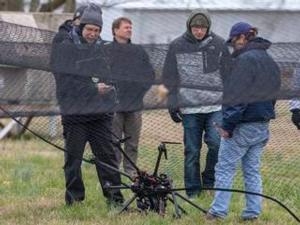
“A second flight verified visibility of the expected crash location via onboard video documentation,” said Glaab. “We also had a trigger light embedded in the field of view to determine when Safeguard would terminate the vehicle.”
With the final checks completed the UAV took off once more for its grand finale. The UAV first performed a search pattern before heading straight towards its objective, at which point Safeguard activated its terminate function. The drone immediately ceased to operate and began falling towards the ground.
The vehicle crashed into the safety net previously set-up by the research team, saving the drone from utter destruction. “The vehicle is damaged but considered potentially repairable,” said Glaab.
The safeguard worked.
Through the use of the America Competes Act, SAND will help prepare small businesses for the competitive future of UAV flight and showcase the NASA Safeguard technology’s ability to assure safety. The goal is to open the skies to drone operators by assuring the safety of their operations.
NASA Langley will host the SAND challenge in August 2020 in Hampton, Virginia. The application website reopened on March 2 and began accepting applications.
(Images provided with NASA news release)



 ANN's Daily Aero-Term (12.04.25): Cooperative Surveillance


 See All