
FAA Proposes Airbus AD For Skin Debonding | Aero-News Network
Aero-News Network
RSS icon RSS feed
podcast icon MP3 podcast
Subscribe Aero-News e-mail Newsletter Subscribe

Airborne Unlimited -- Most Recent Daily Episodes

Episode Date

Airborne-Monday

Airborne-Tuesday

Airborne-Wednesday Airborne-Thursday

Airborne-Friday

Airborne On YouTube

Airborne-Unlimited-12.01.25

AirborneNextGen-
11.18.25

Airborne-Unlimited-11.19.25

Airborne-AffordableFlyers-11.20.25

AirborneUnlimited-11.21.25

LIVE MOSAIC Town Hall (Archived): www.airborne-live.net

Fri, Jan 02, 2015

FAA Proposes Airbus AD For Skin Debonding

Follows EASA AD For A330, A340 Aircraft

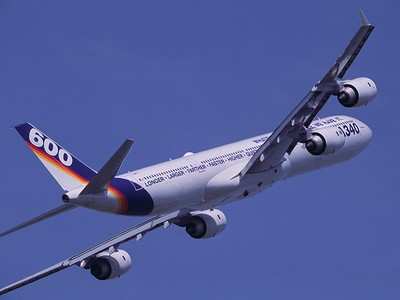
The FAA is proposing an Airworthiness Directive for all Airbus Model A330-200 Freighter, A330-200, A330-300, A340-200, A340-300, A340-500, and A340-600 series airplanes.

This proposed AD was prompted by a report of skin disbonding on a composite side panel of a rudder installed on an A310 airplane. This proposed AD would require a review of the maintenance records of the rudder to determine if any composite side shell panel repair has been done; a thermography inspection limited to the repair areas or complete side shells, as applicable, to identify possible in-service rudder repairs, damages, or fluid ingress; and applicable related investigative and corrective actions.

The FAA is proposing this AD to detect and correct the rudder skin disbonding, which could affect the structural integrity of the rudder, and could result in reduced controllability of the airplane.

EASA issued Airworthiness Directive 2014-0033, dated February 4, 2014 (referred to after this as the Mandatory Continuing Airworthiness Information, or “the MCAI”), to correct an unsafe condition on the airplanes.

The MCAI was prompted by a case of skin disbonding was reported on a composite side panel of a rudder installed on an A310 aeroplane.

The investigation results revealed that this disbonding started from a skin panel area previously repaired in-service in accordance with the Structural Repair Manual (SRM).

The initial damage has been identified as a disbonding between the core and skin of the repaired area. This damage may not be visually detectable and likely propagates during normal operation due to the variation of pressure during ground-air-ground cycles.

Composite rudder side shell panels are also installed on A330 and A340 aeroplanes, which may have been repaired in-service using a similar method.

The proposed AD is open for comments until February 12, 2015.

FMI: Proposed AD

Advertisement

More News

ANN's Daily Aero-Term (11.29.25): Waypoint

Waypoint A predetermined geographical position used for route/instrument approach definition, progress reports, published VFR routes, visual reporting points or points for transiti>[...]

ANN's Daily Aero-Linx (11.29.25)

Aero Linx: Sentimental Journey to Cub Haven Sentimental Journey Flyin began in 1986 with a group of dedicated volunteers working to provide a sentimental return to Lock Haven, the >[...]

NTSB Prelim: Jabiru USA Sport Aircraft LLC J230-SP

The Pilot Would Often Fly Over Their House At A Low Altitude And That Family Members Would Go Outside To Wave On November 14, 2025, at 1708 eastern standard time, a Jabiru USA Spor>[...]

Classic Aero-TV: Crafting The Future of eVTOL Infrastructure

From 2024 (YouTube Edition): Volatus Infrastructure Paves The Way The name “Volatus” seems to be everywhere these days, popping up in a series of partnerships and proje>[...]

Klyde Morris (11.28.25)

Fortnite Conquers All, Klyde FMI: www.klydemorris.com>[...]

blog comments powered by Disqus



Advertisement

Advertisement

Podcasts

Advertisement

© 2007 - 2025 Web Development & Design by Pauli Systems, LC

