
AOPA ASF Report Shows Glass Cockpits Offer Safety Benefits For Pilots | Aero-News Network
Aero-News Network
RSS icon RSS feed
podcast icon MP3 podcast
Subscribe Aero-News e-mail Newsletter Subscribe

Airborne Unlimited -- Most Recent Daily Episodes

Episode Date

Airborne-Monday

Airborne-Tuesday

Airborne-Wednesday Airborne-Thursday

Airborne-Friday

Airborne On YouTube

Airborne-Unlimited-12.01.25

AirborneNextGen-
11.18.25

Airborne-Unlimited-11.19.25

Airborne-AffordableFlyers-11.20.25

AirborneUnlimited-11.21.25

LIVE MOSAIC Town Hall (Archived): www.airborne-live.net

Wed, Aug 01, 2007

AOPA ASF Report Shows Glass Cockpits Offer Safety Benefits For Pilots

But Nothing Beats Vigilance And Good Judgement

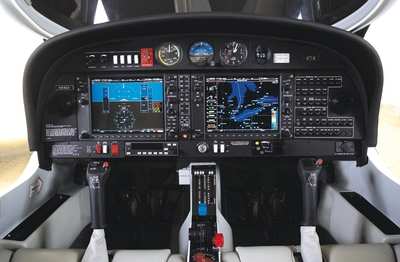
Technologically advanced aircraft (TAA) have fewer accidents when compared to the overall general aviation (GA) fleet, according to an updated study published by the AOPA Air Safety Foundation this week. However, the pilot adovcacy group stresses no amount of technology can replace a pilot’s vigilance and good judgment.

"Light GA pilots are now undergoing the transition that the airlines and corporate pilots underwent in prior decades," states the Air Safety Foundation in the report. "Training requirements center on differences in new-design TAA handling characteristics and the addition of capable but complex avionics packages."

There are three categories of TAA aircraft: newly designed aircraft; newly manufactured classic design aircraft equipped with new avionics; and retrofitted existing aircraft of varying ages. For the purpose of this study, ASF focused their research solely on glass-cockpit aircraft.

The analysis of accidents that occurred between 2003 and 2006 shows that TAA have proportionately fewer accidents than the overall general aviation fleet. While TAA account for 2.8 percent of the GA fleet, they were involved in only 1.5 percent of the accidents.

"As more TAA begin entering the flight training market, we’ll look for changes in the accident statistics," said Bruce Landsberg, executive director of the AOPA Air Safety Foundation. "There’s a potential for more takeoff and landing accidents when these aircraft are used more for instructional missions."

Fuel monitoring and warning systems in TAA have advanced to the point where there was not a single fuel-related accident reported in the Air Safety Foundation’s study. In other general aviation aircraft, fuel management accidents occur at a rate of almost three per week.

The TAA report did note a significant number of weather accidents. Of all fatal TAA accidents during the study period, 44.4 percent were weather-related. As with legacy aircraft, which use traditional avionics and instruments, visual flight rules (VFR) into instrument conditions is a leading cause of weather accidents. The Air Safety Foundation will continue to provide educational material to the pilot community to help bring these numbers down.

Training in TAA is different than with legacy aircraft, and the Air Safety Foundation dedicates a portion of its report to outlining specific training goals with TAA. As with all types of aircraft, initial training begins on the ground. However, with TAA the ground portion is much more extensive than with legacy aircraft.

The Air Safety Foundation encourages all pilots to begin training for TAA with either CD/DVD, simulator, flight-training device, or Web-based training, or a combination of those options. A working knowledge of the avionics systems and how to program them should take place on the ground before pilots begin training in the aircraft. Rushing into the aircraft before grasping the avionics operation is an expensive way to learn and may increase the chance of a midair collision where both pilot and instructor are spending too much time focusing inside the cockpit learning the equipment and not enough time looking outside.

The report, "Technologically Advanced Aircraft: Safety and Training," is available online at the FMI link below.

FMI: www.asf.org/taareport

Advertisement

More News

ANN's Daily Aero-Term (11.28.25): Unmanned Aircraft System (UAS)

Unmanned Aircraft System (UAS) An unmanned aircraft and its associated elements related to safe operations, which may include control stations (ground, ship, or air based), control>[...]

ANN's Daily Aero-Linx (11.28.25)

Aero Linx: Cactus Fly-In The Classic Airplane Association of Arizona, Inc. (CAAA) was incorporated in Arizona as a not for profit corporation on January 10, 2014. The CAAA roster i>[...]

Airborne 11.21.25: NTSB on UPS Accident, Shutdown Protections, Enstrom Update

Also: UFC Buys Tecnams, Emirates B777-9 Buy, Allegiant Pickets, F-22 And MQ-20 The NTSB's preliminary report on the UPS Flight 2976 crash has focused on the left engine pylon's sep>[...]

Airborne 11.26.25: Bonanza-Baron Fini, Archer v LA NIMBYs, Gogo Loses$$$

Also: Bell 505 on SAF, NYPA Gets Flak For BizAv 'Abuse', FAA Venezuela Caution, Horizon Update Textron Aviation has confirmed it will be ending production of the Beechcraft Bonanza>[...]

Airborne-NextGen 11.25.25: EHang Manned Flt, Army UAVs, Starship V3 Booster Boom

Also: FedEx SAF, Archer Midnight Powertrain Tech, Rocket Lab Record, Perseverance Rover Find EHang has logged a major milestone in the development of its pilotless air taxi, loggin>[...]

blog comments powered by Disqus



Advertisement

Advertisement

Podcasts

Advertisement

© 2007 - 2025 Web Development & Design by Pauli Systems, LC

