
FAA Issues SAFO For Pratt & Whitney R-985-AN-14B | Aero-News Network
Aero-News Network
RSS icon RSS feed
podcast icon MP3 podcast
Subscribe Aero-News e-mail Newsletter Subscribe

Airborne Unlimited -- Most Recent Daily Episodes

Episode Date

Airborne-Monday

Airborne-Tuesday

Airborne-Wednesday Airborne-Thursday

Airborne-Friday

Airborne On YouTube

Airborne-Unlimited-12.01.25

AirborneNextGen-
11.18.25

Airborne-Unlimited-11.19.25

Airborne-AffordableFlyers-11.20.25

AirborneUnlimited-11.21.25

LIVE MOSAIC Town Hall (Archived): www.airborne-live.net

Wed, Jul 01, 2015

FAA Issues SAFO For Pratt & Whitney R-985-AN-14B

Cites Flyweight Issues Which Have The Potential To To Cause Engine Failures

The FAA has issued a SAFO (Safety Alert for Operators) for Pratt & Whitney R-985-AN-14B engines following three documented engine failures caused by failed flyweight screws. These failures occurred during flight, resulting in forced landings. At the time of the failures, engine time since overhaul ranged from 2.5 hours to 671.6 hours.

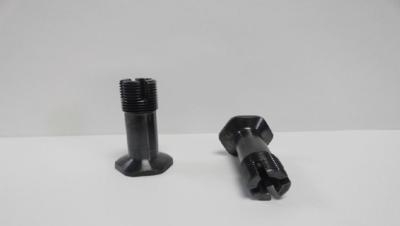
According to the FAA, the engine crankshaft assemblies were overhauled by three different repair facilities. Additionally, inspections of at least four other engines have found cracked screws (P/N 23902) (pictured) and under torqued and/or improperly modified expanders used to secure the screws in the flyweights.

Additional engine models that could be affected by this issue due to similar design include all Pratt & Whitney Wasp Jr (R-985 Series) and Wasp (R-1340 Series) engines, reference image on pg 3.
The list of aircraft that use these engines include, but are not limited to:

  • Air Tractor AT-301 and 401;
  • Ayres Thrush;
  • Beechcraft D17 and 18 series:
  • Boeing-Stearman 75: de Havilland DHC-2 and DHC-3;
  • Gee Bee;
  • Grumman G-21 and G-164;
  • Howard DGA-6, -11, -15;
  • North American T-6; and
  • Weatherly 201 and 620.

The FAA said it should be noted that individual crankshaft assemblies not yet installed in the above engines are also subject to this alert as well as serviceable parts in stock or in work.

Inspections of several engines, including those undergoing overhaul, have found multiple instances where steps have formed on the internal threads of the flyweight screws into which the expander is threaded securing the screw in the flyweight. These steps may impede the proper torquing of the expander which could lead to fatigue cracking of the screws and resulting failure. The FAA said it is currently not aware of any document that approves the removal of steps in the threads of the screw. If, during inspection of the screw, any of the following are found, the screw should be replaced:

  • Steps in the threads of the screw;
  • The surface of the screw is not smooth or has tool marks; or
  • The surface treatment on the screw has been removed.

The current overhaul manual recommends a torque of approximately 1300 inch-pounds to install the screw and a recommended screw stretch of 0.001 to 0.0015 inch. If, at any time during the course of torquing the screw, the screw stretch exceeds the limitations listed in the overhaul manual, the screw should be replaced.

The agency said that certain maintenance actions accomplished between overhauls may provide visual access to the engine flyweights, i.e. cylinder replacement, etc. Owners, operators and repair facilities are urged to inspect the assemblies at those times for any signs of displacement of the screws, expanders, or flyweights. If any abnormalities are observed, the engine should be immediately removed from service and disassembled for further inspection, and the owner/operator should ensure that any affected flyweight screws and expanders are replaced. During overhaul these screws and expanders should be replaced with serviceable parts.

FMI: SAFO

Advertisement

More News

ANN's Daily Aero-Term (11.28.25): Unmanned Aircraft System (UAS)

Unmanned Aircraft System (UAS) An unmanned aircraft and its associated elements related to safe operations, which may include control stations (ground, ship, or air based), control>[...]

ANN's Daily Aero-Linx (11.28.25)

Aero Linx: Cactus Fly-In The Classic Airplane Association of Arizona, Inc. (CAAA) was incorporated in Arizona as a not for profit corporation on January 10, 2014. The CAAA roster i>[...]

Airborne 11.21.25: NTSB on UPS Accident, Shutdown Protections, Enstrom Update

Also: UFC Buys Tecnams, Emirates B777-9 Buy, Allegiant Pickets, F-22 And MQ-20 The NTSB's preliminary report on the UPS Flight 2976 crash has focused on the left engine pylon's sep>[...]

Airborne 11.26.25: Bonanza-Baron Fini, Archer v LA NIMBYs, Gogo Loses$$$

Also: Bell 505 on SAF, NYPA Gets Flak For BizAv 'Abuse', FAA Venezuela Caution, Horizon Update Textron Aviation has confirmed it will be ending production of the Beechcraft Bonanza>[...]

Airborne-NextGen 11.25.25: EHang Manned Flt, Army UAVs, Starship V3 Booster Boom

Also: FedEx SAF, Archer Midnight Powertrain Tech, Rocket Lab Record, Perseverance Rover Find EHang has logged a major milestone in the development of its pilotless air taxi, loggin>[...]

blog comments powered by Disqus



Advertisement

Advertisement

Podcasts

Advertisement

© 2007 - 2025 Web Development & Design by Pauli Systems, LC

