Thu, Dec 01, 2016
Accident Analysis Finds High Incidence Of LOC Due To Missed Checklist Items
The FAA has published a Safety Alert For Operators (SAFO) emphasizing the importance of utilizing checklists and specifically performing stabilized hover checks before departure.
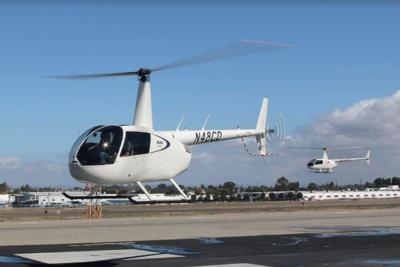
A review of helicopter incidents and accidents over the past five years has identified several accidents where a loss-of-control (LOC) was encountered immediately after liftoff while light on the skids/gear, or from other issues caused by missed checklist items.
Helicopters have the unique ability to takeoff and land nearly anywhere. While this is among the helicopter’s greatest attributes, it also can create scenarios leaving little room for error. Several recent helicopter accidents have occurred as a result of pilots not bringing the helicopter to a stabilized hover before initiating takeoff. Rather, pilots elected to immediately and rapidly takeoff from the ground. In some cases, this has led to a LOC where the result was either an incident, or an accident resulting in significant damage to the helicopter and/or fatalities to those onboard.
Post-accident analysis indicated that the accident sequence began with indications that were evident when the helicopter was light on the skids, yet the pilot elected not to abort the takeoff by reducing collective. Instead, the pilot continued pulling in collective (or continued manipulating the controls) resulting in a complete LOC. In many of these accidents, the helicopter was not properly configured for flight, either because a checklist item was missed, or because a checklist was not used at all by the pilot.
In other instances, pilots have attempted to perform either maximum performance or confined area takeoffs without completing a hover power and systems check. One accident resulted from a pilot attempting a takeoff from the surface without completing a hover power check. As the aircraft lifted from a rooftop helipad and over the edge of the rooftop, the aircraft lost altitude and crashed into a parking lot below. It was discovered that one of the two engines was in the “fly” position but the other engine was still in the idle position. If a hover check was performed before takeoff, this accident could have been prevented.
The FAA recommends that pilots perform the following during the takeoff sequence:
- Always ensure the area you are taking off from is sufficient for the conditions and the capabilities of the aircraft, as well as free and clear of debris that could pose a hazard to an aircraft.
- Using strict discipline and without compromise, pilots should ALWAYS USE an APPROPRIATE CHECKLIST to ensure the helicopter is properly configured for takeoff.
- Unless prohibited by environmental conditions such as the possibility of whiteout, brownout, etc., always perform a hover check prior to takeoff. If a takeoff from the surface is required, perform the hover check, land, and then depart from the surface, taking the aircraft’s performance into consideration.
- When performing a vertical takeoff, raise the helicopter vertically from the surface to a normal hovering altitude (2 to 3 feet) with minimal lateral or longitudinal movement maintaining a constant heading. If at any time during initial collective pull the helicopter does not appear to be stabilized, ABORT the takeoff by smoothly reducing the collective.
- Review the FAA Helicopter Flying Handbook, Chapter 9, Vertical Takeoff to a Hover and Chapter 10, Advanced Flight Maneuvers.
More News
Unmanned Aircraft System (UAS) An unmanned aircraft and its associated elements related to safe operations, which may include control stations (ground, ship, or air based), control>[...]
Aero Linx: Cactus Fly-In The Classic Airplane Association of Arizona, Inc. (CAAA) was incorporated in Arizona as a not for profit corporation on January 10, 2014. The CAAA roster i>[...]
Also: UFC Buys Tecnams, Emirates B777-9 Buy, Allegiant Pickets, F-22 And MQ-20 The NTSB's preliminary report on the UPS Flight 2976 crash has focused on the left engine pylon's sep>[...]
Also: Bell 505 on SAF, NYPA Gets Flak For BizAv 'Abuse', FAA Venezuela Caution, Horizon Update Textron Aviation has confirmed it will be ending production of the Beechcraft Bonanza>[...]
Also: FedEx SAF, Archer Midnight Powertrain Tech, Rocket Lab Record, Perseverance Rover Find EHang has logged a major milestone in the development of its pilotless air taxi, loggin>[...]



 ANN's Daily Aero-Term (11.28.25): Unmanned Aircraft System (UAS)


 See All