

SpaceX To Provide Launch Services For Next GOES Mission | Aero-News Network
Aero-News Network
RSS icon RSS feed
podcast icon MP3 podcast
Subscribe Aero-News e-mail Newsletter Subscribe

Airborne Unlimited -- Most Recent Daily Episodes

Episode Date

Airborne-Monday

Airborne-Tuesday

Airborne-Wednesday Airborne-Thursday

Airborne-Friday

Airborne On YouTube

Airborne-Unlimited-12.08.25

AirborneNextGen-
12.02.25

Airborne-Unlimited-12.03.25

Airborne-FltTraining-12.04.25

AirborneUnlimited-12.05.25

AFE 2025 LIVE MOSAIC Town Hall (Archived): www.airborne-live.net

Sun, Sep 19, 2021

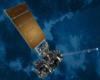
SpaceX To Provide Launch Services For Next GOES Mission

GOES-U Provides Earth With Advanced Imagery and Weather Measurements

SpaceX has been selected by NASA to provide launch services for the Geostationary Operational Environmental Satellite-U mission. 

GOES-U will provide advanced imagery and atmospheric measurements of Earth’s weather, oceans, and environment, as well as real-time mapping of total lightning activity and improved monitoring of solar activity and space weather.

By studying lightning, NASA scientists are working to develop new ways to help forecast the intensity of incoming hurricanes. According to NASA, GOES observations have proven helpful in monitoring dust storms, volcanic eruptions and forest fires.

Geostationary satellites circle the Earth in geosynchronous orbit, which means they orbit the Earth’s equatorial plane at a speed matching the Earth’s rotation.

The total cost for NASA to launch GOES-U is approximately $152.5 million, which includes the launch service and other mission-related costs.

GOES-U is the fourth and final spacecraft in the GOES-R Series of geostationary weather satellites operated by the National Oceanic and Atmospheric Administration. The GOES-U mission aims to launch in April 2024 on a Falcon Heavy rocket from Launch Complex 39A at Kennedy Space Center in Florida. 

On October 16, 1975, NOAA’s first Geostationary Operational Environmental Satellite was launched from Cape Canaveral Air Force Station in Florida. GOES-1 returned it’s first imagery nine days after launching and became an essential component to NOAA. GOES-1 remained active throughout the launches of GOES-2-6, until finally being decommissioned on March 7, 1985, according to NOAA.

The GOES-R Series is a joint effort between NASA and NOAA and includes GOES-R, GOES-S, GOES-T, and GOES-U.

FMI: www.nasa.gov

Advertisement

More News

Aero-FAQ: Dave Juwel's Aviation Marketing Stories -- ITBOA BNITBOB

Dave Juwel's Aviation Marketing Stories ITBOA BNITBOB ... what does that mean? It's not gibberish, it's a lengthy acronym for "In The Business Of Aviation ... But Not In The Busine>[...]

NTSB Prelim: Rutan Long-EZ

The Pilot Attempted Several Times To Restart The Engine And Diverted To Long Beach Airport/Daughtery Field On October 20, 2025, about 1603 Pacific daylight time, an experimental am>[...]

ANN's Daily Aero-Term (12.05.25): Hazardous Weather Information

Hazardous Weather Information Summary of significant meteorological information (SIGMET/WS), convective significant meteorological information (convective SIGMET/WST), urgent pilot>[...]

Aero-News: Quote of the Day (12.05.25)

"The latest development underscores the government of Malaysia’s commitment in providing closure to the families affected by this tragedy..." Source: From statements made by >[...]

Airborne-Flight Training 12.04.25: Ldg Fee Danger, Av Mental Health, PC-7 MKX

Also: IAE Acquires Diamond Trainers, Army Drones, FedEx Pilots Warning, DA62 MPP To Dresden Tech Uni The danger to the flight training industry and our future pilots is clear. Dona>[...]

blog comments powered by Disqus



Advertisement

Advertisement

Podcasts

Advertisement

© 2007 - 2025 Web Development & Design by Pauli Systems, LC

