
US Navy Approves F/A-18 IRST System For Production | Aero-News Network
Aero-News Network
RSS icon RSS feed
podcast icon MP3 podcast
Subscribe Aero-News e-mail Newsletter Subscribe

Airborne Unlimited -- Most Recent Daily Episodes

Episode Date

Airborne-Monday

Airborne-Tuesday

Airborne-Wednesday Airborne-Thursday

Airborne-Friday

Airborne On YouTube

Airborne-Unlimited-12.01.25

AirborneNextGen-
11.18.25

Airborne-Unlimited-11.19.25

Airborne-AffordableFlyers-11.20.25

AirborneUnlimited-11.21.25

LIVE MOSAIC Town Hall (Archived): www.airborne-live.net

Sun, Feb 01, 2015

US Navy Approves F/A-18 IRST System For Production

Long-Range Sensor System Demonstrated Production Readiness On Super Hornet

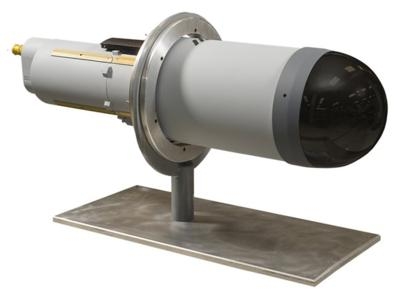
The F/A-18 Super Hornet infrared search and track (IRST) system, developed and integrated by Boeing and Lockheed Martin has received approval from the U.S. Navy to enter low-rate initial production.    

The IRST system consists of Lockheed Martin’s IRST21 sensor , the GE Aviation FPU-13 Fuel Tank Assembly and the Meggitt Defense Industry Environmental Control unit. The system demonstrated its production readiness through a series of extensive assessments and reviews, including flight tests.

“This ‘see first, strike first’ capability can be used in a variety of threat environments and is a game changer for our warfighters as we combat future adversaries,” said U.S. Navy F/A-18 program manager Capt. Frank Morley. IRST is expected to deploy on the F/A-18 Super Hornet in 2017.

IRST21 is the next generation of Lockheed Martin’s legacy IRST sensor system, which accumulated more than 300,000 flight hours on the U.S. Navy’s F-14 and international F-15 platforms.  The long-range IRST21 sensor uses infrared search and track technology to detect, track and enable the Super Hornet to engage threats with air-to-air weapons.

“Lockheed Martin and Boeing have proven the maturity of the IRST21 sensor and the IRST system and are poised to get this advanced capability out to the fleet to support Navy carrier strike group objectives,” said Ken Fuhr, fixed wing program director at Lockheed Martin Missiles and Fire Control.

In addition to detecting airborne threats, IRST significantly enhances multiple target resolution compared to radar, providing greater discrimination of threat formations at longer ranges. Data from the IRST21 sensor is fused with other on-board F/A-18 sensor data to provide maximum situational awareness to the warfighter.

“The IRST system is another example of how we continue to evolve Super Hornet capabilities to ensure it outpaces future adversaries,” said Tim Adrian, F/A-18 IRST program manager at Boeing.

(Image provided by Lockheed Martin)

FMI: www.navy.mil, www.lockheedmartin.com

Advertisement

More News

ANN's Daily Aero-Term (11.29.25): Waypoint

Waypoint A predetermined geographical position used for route/instrument approach definition, progress reports, published VFR routes, visual reporting points or points for transiti>[...]

ANN's Daily Aero-Linx (11.29.25)

Aero Linx: Sentimental Journey to Cub Haven Sentimental Journey Flyin began in 1986 with a group of dedicated volunteers working to provide a sentimental return to Lock Haven, the >[...]

NTSB Prelim: Jabiru USA Sport Aircraft LLC J230-SP

The Pilot Would Often Fly Over Their House At A Low Altitude And That Family Members Would Go Outside To Wave On November 14, 2025, at 1708 eastern standard time, a Jabiru USA Spor>[...]

Classic Aero-TV: Crafting The Future of eVTOL Infrastructure

From 2024 (YouTube Edition): Volatus Infrastructure Paves The Way The name “Volatus” seems to be everywhere these days, popping up in a series of partnerships and proje>[...]

Klyde Morris (11.28.25)

Fortnite Conquers All, Klyde FMI: www.klydemorris.com>[...]

blog comments powered by Disqus



Advertisement

Advertisement

Podcasts

Advertisement

© 2007 - 2025 Web Development & Design by Pauli Systems, LC

