Wed, Mar 02, 2016
Integrated Technology Solutions Are Driving P&WC’s Turboshaft Engine Leadership
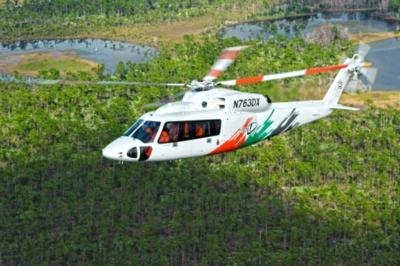
Pratt & Whitney Canada has announced the latest entry into service of a full authority digital electronic control (FADEC)-equipped turboshaft engine. The newest engine to feature the system is the PW210A powering Finmeccanica’s AW169, which joins the PW210S on Sikorsky’s S-76D and the PT6C-67E on Airbus Helicopters’ H175 – the first PT6 engine to be equipped with FADEC.

FADEC is an advanced control system that enables the engine to perform at maximum efficiency. It simplifies engine operations, reduces pilot workload and provides greater performance and aircraft availability. The technology’s patented noise-cancellation capabilities also enhance cabin comfort by creating a quieter ride. Going forward, P&WC will deliver the FADEC system on all new turboshaft engines across the board.
As a FADEC leader across all aviation business segments, P&WC has implemented the system on 15 different engine models in the past 10 years, continuing to refine this engine control technology. P&WC and Pratt & Whitney’s (P&W’s) shared FADEC heritage extends back to 1970s when P&W introduced the technology on its PW2000 engine. In the early 1990s, P&WC then launched the PW305 engine, the first of its engines to fly with FADEC. The company continues to work closely with airframe OEMs on systems collaboration and is actively driving technological advancement through integrated software and engine solutions across all industry segments and engine applications.
“While many in the aviation industry still tend to concentrate primarily on materials and aerodynamics, we have taken a leadership position in integrated technology solutions, such as engine controls and software, which gives us a competitive advantage,” said Irene Makris, Vice President, Marketing, P&WC. “It’s about leveraging the latest software and engine technologies to best meet our customers’ needs and raise the performance bar higher than ever.”
P&WC’s turboshaft portfolio has 34 engine models. It has delivered 15,000 engines, with more than 8,000 engines flying today. There are 4,300 P&WC-powered helicopters flying around the world, and the engine fleet has accumulated over 55 million flying hours to date.
(Source: Pratt & Whitney Canada news release)
More News
Waypoint A predetermined geographical position used for route/instrument approach definition, progress reports, published VFR routes, visual reporting points or points for transiti>[...]
Aero Linx: Sentimental Journey to Cub Haven Sentimental Journey Flyin began in 1986 with a group of dedicated volunteers working to provide a sentimental return to Lock Haven, the >[...]
The Pilot Would Often Fly Over Their House At A Low Altitude And That Family Members Would Go Outside To Wave On November 14, 2025, at 1708 eastern standard time, a Jabiru USA Spor>[...]
From 2024 (YouTube Edition): Volatus Infrastructure Paves The Way The name “Volatus” seems to be everywhere these days, popping up in a series of partnerships and proje>[...]
Fortnite Conquers All, Klyde FMI: www.klydemorris.com>[...]



 ANN's Daily Aero-Term (11.29.25): Waypoint


 See All