Fatigue Was A Factor
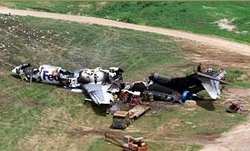
 A FedEx Boeing 727 crashed on
landing in Tallahassee, Florida in 2002 because of flight crew
performance failures, the National Transportation Safety Board has
found.
A FedEx Boeing 727 crashed on
landing in Tallahassee, Florida in 2002 because of flight crew
performance failures, the National Transportation Safety Board has
found.
On July 26, 2002, FedEx flight 1478, a Boeing 727-232F (N497FE)
struck trees on final approach to Tallahassee Regional Airport at
5:37 a.m. The flight had originated in Memphis (TN). The captain,
first officer and flight engineer were seriously injured, and the
airplane was destroyed by impact and resulting fire.
In its final report adopted Tuesday, the Safety Board said that
the probable cause of the accident was the failure of the captain
and first officer to establish and maintain a proper glidepath
during the night visual approach to landing. Contributing to the
accident was a combination of the captain's and first officer's
fatigue and failure to adhere to company flight procedures, the
captain's and flight engineer's failure to monitor the approach,
and the first officer's color vision deficiency.
Although runway 09 did not have an Instrument Landing System, it
was equipped with a Precision Approach Path Indicator, a series of
lights that aid flight crews in determining if they are on a proper
glide slope to the runway, too high or too low. The Board found
that the first officer, who was the flying pilot, had a history of
color vision deficiency, for which he had a waiver from the Federal
Aviation Administration. Extensive post-crash evaluation of the
first officer's color vision concluded that this deficiency would
likely have interfered with his ability to discern the differences
between the white and red lights that give the pilots their
altitude clues.
The Board noted that the current process of color vision
screening required for pilots will not detect certain severe color
vision deficiencies. The two recommendations the Board issued in
this report ask the FAA to determine the operational effectiveness
of each of the color vision test protocols it currently allows and,
then, establish a standard battery of color vision tests to be
administered to all commercial pilots.
 The Board's report cites a series of
performance deficiencies exhibited by the flight crew during the
approach, including continuing their unstabilized approach below
500 feet rather than executing a go-around, and errors by the
captain that suggest he was not fully alert. The captain indicated
after the accident that he had not slept well the two nights before
the accident due to responsibilities at home, and the first officer
reported that he had been having difficulty adjusting his sleep
cycle to the reserve-duty schedule that he had recently been placed
on.
The Board's report cites a series of
performance deficiencies exhibited by the flight crew during the
approach, including continuing their unstabilized approach below
500 feet rather than executing a go-around, and errors by the
captain that suggest he was not fully alert. The captain indicated
after the accident that he had not slept well the two nights before
the accident due to responsibilities at home, and the first officer
reported that he had been having difficulty adjusting his sleep
cycle to the reserve-duty schedule that he had recently been placed
on.
This is the latest Safety Board investigation in which it has
cited fatigue as a factor. Fatigue in transportation operations has
been on the NTSB's list of most wanted safety recommendations since
the inception of the list in 1990. Since that time, little progress
has been made to revise the hours-of-service regulations that would
incorporate the results of the latest research on fatigue and sleep
issues. The Board's latest recommendations to the FAA on this
subject are classified "Open - Unacceptable Response."



 NTSB Final Report: Patriot Aircraft LLC CX1900A


 See All