
Piper Delivers Second Seminole Aircraft To Canadian Aviation College | Aero-News Network
Aero-News Network
RSS icon RSS feed
podcast icon MP3 podcast
Subscribe Aero-News e-mail Newsletter Subscribe

Airborne Unlimited -- Most Recent Daily Episodes

Episode Date

Airborne-Monday

Airborne-Tuesday

Airborne-Wednesday Airborne-Thursday

Airborne-Friday

Airborne On YouTube

Airborne-Unlimited-12.01.25

AirborneNextGen-
11.18.25

Airborne-Unlimited-11.19.25

Airborne-AffordableFlyers-11.20.25

AirborneUnlimited-11.21.25

LIVE MOSAIC Town Hall (Archived): www.airborne-live.net

Thu, Jun 02, 2022

Piper Delivers Second Seminole Aircraft To Canadian Aviation College

Forty-Six-Years On, Piper’s Twin Trainer Remains Relevant 

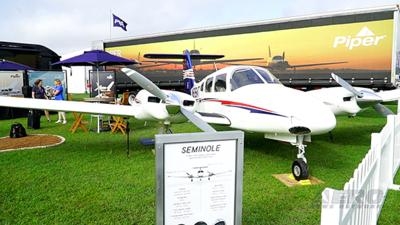
PiperAircraft has announced the delivery of a new, Piper Seminole, twin-engined, training aircraft to Select Aviation College. The aircraft is the second of its type the legendary, Vero Beach, General Aviation Marque has delivered to the respected, Canadian aviation college. 

The Seminoles join an impressive fleet of training aircraft that includes twenty-five, single-engine aircraft; two amphibious seaplanes; and six helicopters. 

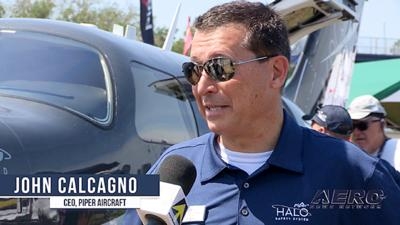
Piper President and CEO, John Calcagno, states, “Piper Aircraft is proud to be part of Select Aviation College’s comprehensive aviation program. As Canada’s leading aviation college, they demonstrate their commitment to excellence and their students by providing multiple aviation programs and opportunities for their students. We look forward to their continued success and to providing more Piper trainers in support of their commitment to aviation education.”

Developed from the venerable, Piper Cherokee, the Seminole first flew in 1976. Since its Bicentennial debut, over nine-hundred of the robust, easy to fly twins have been built (including N3047B, the aircraft in which I earned my ATP many, many, many years ago--MM, Ed). 

Early specimens were equipped with 180 hp (135 kW) Lycoming O-360-E1A6D engines. The right-hand engine was a Lycoming LO-360-E1A6D variant, (the “L” standing for “Left”) which—thanks to an inverse crankshaft—turned in the opposite direction of the left-hand engine. This feature eliminated the critical engine, and made the aircraft more controllable in VMC situations.

Later models featured engine upgrades, to include turbo-chargers—which made for better high-density-altitude performance and less terror during single-engine operations. 

Production of the Seminole has reflected the varying fortunes and failures of the GA marketplace, with the original production run coming to an end in 1982, a second run spanning the period from 1988 to 1990, and finally a resumption of steady production that’s been underway since 1995.

FMI: www.piper.com

Advertisement

More News

ANN's Daily Aero-Term (11.29.25): Waypoint

Waypoint A predetermined geographical position used for route/instrument approach definition, progress reports, published VFR routes, visual reporting points or points for transiti>[...]

ANN's Daily Aero-Linx (11.29.25)

Aero Linx: Sentimental Journey to Cub Haven Sentimental Journey Flyin began in 1986 with a group of dedicated volunteers working to provide a sentimental return to Lock Haven, the >[...]

NTSB Prelim: Jabiru USA Sport Aircraft LLC J230-SP

The Pilot Would Often Fly Over Their House At A Low Altitude And That Family Members Would Go Outside To Wave On November 14, 2025, at 1708 eastern standard time, a Jabiru USA Spor>[...]

Classic Aero-TV: Crafting The Future of eVTOL Infrastructure

From 2024 (YouTube Edition): Volatus Infrastructure Paves The Way The name “Volatus” seems to be everywhere these days, popping up in a series of partnerships and proje>[...]

Klyde Morris (11.28.25)

Fortnite Conquers All, Klyde FMI: www.klydemorris.com>[...]

blog comments powered by Disqus



Advertisement

Advertisement

Podcasts

Advertisement

© 2007 - 2025 Web Development & Design by Pauli Systems, LC

