Sat, Oct 02, 2004
Burt provides some preliminary information about the rolling
motions seen on the First X-Prize Flight
Burt Rutan: The
complex reason on why the rolling departure occurred will be
described in a report we will post at a later date. What I am
intending to do here is merely address some of the incorrect rumors
about the rolls that have been seen in various news stories and web
discussion groups.
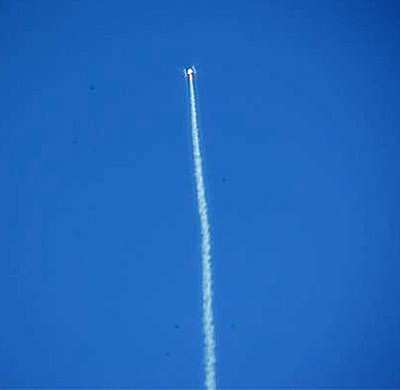
While the first roll occurred at a high true speed, about 2.7
Mach, the aerodynamic loads were quite low (120 KEAS) and were
decreasing rapidly, so the ship never saw any significant
structural stresses. The reason that there were so many rolls was
because shortly after they started, Mike was approaching the
extremities of the atmosphere. Nearly all of the 29 rolls that
followed the initial departure were basically at near-zero-q, thus
they were a continuous rolling motion without aerodynamic damping,
rather than the airplane-like aerodynamic rolls seen by an
aerobatic airplane. In other words, they were more like space
flight than they were like airplane flight. Thus, Mike could not
damp the motions with his aerodynamic flight controls.
Mike elected to wait until he feathered the boom-tail in space,
before using the reaction control system thrusters (RCS) to damp
the roll rate. When he finally started to damp the rates he did so
successfully and promptly. The RCS damping, to a stable attitude
without significant angular rates was complete well before the ship
reached apogee (337,600 feet, or 103 Km). That gave Mike time to
relax, note his peak altitude, and then pick up a digital
high-resolution camera and take some great photos out the windows.
Those photos are now being considered for publication by a major
magazine.
While we did not plan the rolls, we did get valuable engineering
data on how well our RCS system works in space to damp high angular
rates. We also got a further evaluation of our “Care-free
Reentry” capability, under a challenging test condition. As
seen on the videos of the flight, the ship righted itself quickly
and accurately without pilot input as it fell straight into the
atmosphere. No other winged, horizontal-landing spaceship (X-15,
Buran, SpaceShuttle) has this capability.
More News
Waypoint A predetermined geographical position used for route/instrument approach definition, progress reports, published VFR routes, visual reporting points or points for transiti>[...]
Aero Linx: Sentimental Journey to Cub Haven Sentimental Journey Flyin began in 1986 with a group of dedicated volunteers working to provide a sentimental return to Lock Haven, the >[...]
The Pilot Would Often Fly Over Their House At A Low Altitude And That Family Members Would Go Outside To Wave On November 14, 2025, at 1708 eastern standard time, a Jabiru USA Spor>[...]
From 2024 (YouTube Edition): Volatus Infrastructure Paves The Way The name “Volatus” seems to be everywhere these days, popping up in a series of partnerships and proje>[...]
Fortnite Conquers All, Klyde FMI: www.klydemorris.com>[...]



 ANN's Daily Aero-Term (11.29.25): Waypoint


 See All