

Missing Vietnam-Era Navy Pilot Identified | Aero-News Network
Aero-News Network
RSS icon RSS feed
podcast icon MP3 podcast
Subscribe Aero-News e-mail Newsletter Subscribe

Airborne Unlimited -- Most Recent Daily Episodes

Episode Date

Airborne-Monday

Airborne-Tuesday

Airborne-Wednesday Airborne-Thursday

Airborne-Friday

Airborne On YouTube

Airborne-Unlimited-12.01.25

AirborneNextGen-
11.18.25

Airborne-Unlimited-11.19.25

Airborne-AffordableFlyers-11.20.25

AirborneUnlimited-11.21.25

LIVE MOSAIC Town Hall (Archived): www.airborne-live.net

Sat, Jun 02, 2007

Missing Vietnam-Era Navy Pilot Identified

"Until They Are Home"

The Department of Defense POW/Missing Personnel Office (DPMO) announced May 30 the remains of a US airman, missing in action from the Vietnam War, have been identified.

He is Lt. Michael T. Newell, of Ellenville, NY. His remains were returned to his family and he was buried with full military honors May 30 in Arlington National Cemetery near Washington.

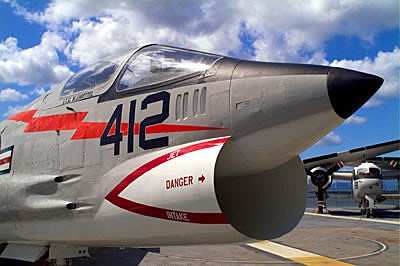
Newell was flying an F-8E Crusader aircraft as wingman in a flight of two on a combat air patrol over North Vietnam on December 14, 1966. During the mission, the flight leader saw a surface-to-air missile explode between the two aircraft. Although Newell initially reported that he had survived the blast, his aircraft gradually lost power and crashed near the border between Nghe An and Thanh Hoa provinces in south central North Vietnam. The flight leader did not see a parachute nor did he hear an emergency beacon signal. He stayed in the area and determined that Newell did not escape from the aircraft prior to the crash.

Between 1993 and 2002, joint US/Socialist Republic of Vietnam (SRV) teams, led by the Joint POW/MIA Accounting Command (JPAC), visited the area of the incident five times to conduct investigations and survey the crash site. They found pilot-related artifacts and aircraft wreckage consistent to an F-8 Crusader.

In 2004, a joint US/SRV team began excavating the crash site. The team was unable to complete the recovery and subsequent teams re-visited the site two more times before the recovery was completed in 2006. As a result, the teams found human remains and additional pilot-related items.

Among other forensic identification tools and circumstantial evidence, scientists from JPAC also used dental comparisons in the identification of the remains.

FMI: www.navy.mil, www.dtic.mil/dpmo/

Advertisement

More News

ANN's Daily Aero-Term (11.29.25): Waypoint

Waypoint A predetermined geographical position used for route/instrument approach definition, progress reports, published VFR routes, visual reporting points or points for transiti>[...]

ANN's Daily Aero-Linx (11.29.25)

Aero Linx: Sentimental Journey to Cub Haven Sentimental Journey Flyin began in 1986 with a group of dedicated volunteers working to provide a sentimental return to Lock Haven, the >[...]

NTSB Prelim: Jabiru USA Sport Aircraft LLC J230-SP

The Pilot Would Often Fly Over Their House At A Low Altitude And That Family Members Would Go Outside To Wave On November 14, 2025, at 1708 eastern standard time, a Jabiru USA Spor>[...]

Classic Aero-TV: Crafting The Future of eVTOL Infrastructure

From 2024 (YouTube Edition): Volatus Infrastructure Paves The Way The name “Volatus” seems to be everywhere these days, popping up in a series of partnerships and proje>[...]

Klyde Morris (11.28.25)

Fortnite Conquers All, Klyde FMI: www.klydemorris.com>[...]

blog comments powered by Disqus



Advertisement

Advertisement

Podcasts

Advertisement

© 2007 - 2025 Web Development & Design by Pauli Systems, LC

