
USS Coronado Deploys With NextGen UAV Controls From Raytheon | Aero-News Network
Aero-News Network
RSS icon RSS feed
podcast icon MP3 podcast
Subscribe Aero-News e-mail Newsletter Subscribe

Airborne Unlimited -- Most Recent Daily Episodes

Episode Date

Airborne-Monday

Airborne-Tuesday

Airborne-Wednesday Airborne-Thursday

Airborne-Friday

Airborne On YouTube

Airborne-Unlimited-12.01.25

AirborneNextGen-
11.18.25

Airborne-Unlimited-11.19.25

Airborne-AffordableFlyers-11.20.25

AirborneUnlimited-11.21.25

LIVE MOSAIC Town Hall (Archived): www.airborne-live.net

Mon, May 02, 2016

USS Coronado Deploys With NextGen UAV Controls From Raytheon

Unmanned Helicopter Control System Brings Flexible Mission Control To First Us Navy Littoral Missions

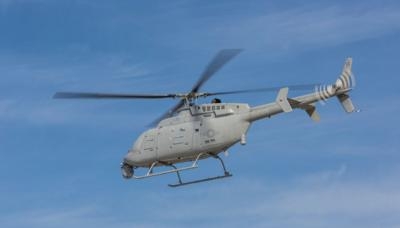
The U.S. Navy's Naval Air Systems Command has deployed advanced mission control developed by Raytheon for the MQ-8 Fire Scout, an unmanned helicopter, aboard the Littoral Combat Ship USS Coronado, which is now underway. Navy control hardware and Raytheon control software were combined for robust, flexible command and control of Fire Scout missions in littoral waters.

The USS Coronado is one of the Navy's newest Littoral Combat Ships, designed to operate close to shorelines. Coronado's deployment of Fire Scout extends the fleet's situational awareness.

"Raytheon's UAV ground controls help support Navy missions without putting sailors' lives at risk," said Todd Probert, vice president of Mission Support and Modernization at Raytheon IIS. "Our innovative technology is helping the U.S. military evolve standards of performance and reliability as they accomplish their critical missions more efficiently and effectively."

Navy hardware and Raytheon's software are built with an open architecture, maximizing flexibility to add new technology as needed. Under a related effort, the Navy's Common Control System, or NCCS, will be able to control any air, ground, surface and subsurface vehicles as they deploy with the fleet. Built on the flexible foundation of Fire Scout MCS, that capability will reduce Navy-wide implementation costs and training requirements for unmanned systems.

"Our new Fire Scout MCS enables Fire Scout to bring more mission to more areas," said Captain Jeff Dodge, U.S. Navy, Fire Scout program manager. "Fire Scout is a proven capability in dynamic littoral environments, and now provides the potential for multiple platforms to be controlled from a single MCS aboard the ship."

USS Coronado is the first Littoral Combat Ship to use this upgraded Fire Scout MCS operationally, after logging 600+ hours of testing.

(Source: Raytheon news release)

FMI: www.raytheon.com, www.navy.mil

Advertisement

More News

ANN's Daily Aero-Term (11.29.25): Waypoint

Waypoint A predetermined geographical position used for route/instrument approach definition, progress reports, published VFR routes, visual reporting points or points for transiti>[...]

ANN's Daily Aero-Linx (11.29.25)

Aero Linx: Sentimental Journey to Cub Haven Sentimental Journey Flyin began in 1986 with a group of dedicated volunteers working to provide a sentimental return to Lock Haven, the >[...]

NTSB Prelim: Jabiru USA Sport Aircraft LLC J230-SP

The Pilot Would Often Fly Over Their House At A Low Altitude And That Family Members Would Go Outside To Wave On November 14, 2025, at 1708 eastern standard time, a Jabiru USA Spor>[...]

Classic Aero-TV: Crafting The Future of eVTOL Infrastructure

From 2024 (YouTube Edition): Volatus Infrastructure Paves The Way The name “Volatus” seems to be everywhere these days, popping up in a series of partnerships and proje>[...]

Klyde Morris (11.28.25)

Fortnite Conquers All, Klyde FMI: www.klydemorris.com>[...]

blog comments powered by Disqus



Advertisement

Advertisement

Podcasts

Advertisement

© 2007 - 2025 Web Development & Design by Pauli Systems, LC

