Air Force Tells Pilots ... Slow Down | Aero-News Network
Aero-News Network
RSS icon RSS feed
podcast icon MP3 podcast
Subscribe Aero-News e-mail Newsletter Subscribe

** AIRBORNE 05.21.13 Aero-TV-- CLICK HERE! ** HD iPad-Friendly Version -- AIRBORNE 05.21.13 **

** AIRBORNE 05.17.13 Aero-TV-- CLICK HERE! ** HD iPad-Friendly Version -- AIRBORNE 05.17.13 **

** AIRBORNE 04.01.13 SPECIAL EDITION of Aero-TV-- CLICK HERE! ** HD iPad-Friendly Version -- AIRBORNE 04.01.13 SPECIAL EDITION **

Mon, Apr 23, 2012

Air Force Tells Pilots ... Slow Down

Reduced Cruising Speeds Part Of Overall Plan To Reduce Fuel Consumption

The USAF is exploring options in its effort to reduce the amount of fuel used across its 4,693 aircraft fleet. With the recent price increase in oil, the Air Force is seeing a $1 billion increase in fuel cost for 2012. The Air Force is the largest energy user in the federal government, making 900 air mobility flights globally daily, including combat sorties.

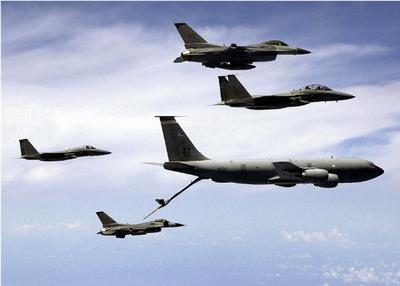
One of the methods being used is repowering aircraft with new engines. This has been done with the KC-135 aerial refueling fleet, and is currently underway on the C-5M Super Galaxy airlifter, reducing not only fuel burn but also maintenance cost.
 
The changes that have taken place are already having an effect, according to a report in Stars and Stripes. The USAF hauls 27% more cargo than it did five years ago, but fuel consumption has decreased 4% since 2006. The per-mile cost to haul a ton of cargo has decreased 21% in that time. Changing aircraft routing has also had an effect on the service’s fuel bill. By optimizing flight plans through friendly countries’ air space via diplomatic methods, the Air Force saved $2.4 million in 2011.

Reducing aircraft cruise speeds has also played a part; C-17 crews slowed down 16mph to 568mph and choose routes and altitudes to maximize fuel conservation. C-130 crews are reducing engine ground run time by cutting out non-essential procedures that take up time on the runway. The use of onboard auxiliary power units to run onboard systems instead of relying on electric power supplied by engines is saving a considerable amount of fuel as well. (USAF Photo)

FMI: www.af.mil

Advertisement

More News

Four Companies Recognized With 2013 EBAA Safety Of Flight Awards

Cited For Focus On Maintaining And Improving Best Practices Four European companies have been recognized for their commitment to safe operations as recipients of the 2013 European >[...]

Classic Aero-TV: Viking Engines--Building A Rep For Alternative SportAv Engines

Rotax Is NOT The Only Player In Sport Aviation Propulsion Ya gotta hand to Viking... in an industry so VERY well dominated by Rotax, it takes some serious talent and extraordinary >[...]

ANN's Daily Aero-Linx (05.22.13)

The European Cockpit Association The European Cockpit Association (ECA) was created in 1991 and is the representative body of European pilots at European Union (EU) level. It repre>[...]

ANN's Daily Aero-Term (05.22.13): Known Traffic

With respect to ATC clearances, means aircraft whose altitude, position, and intentions are known to ATC.>[...]

Aero-News: Quote Of The Day (05.22.13)

"(T)he PC-24 is a completely new development – not a 'me too product'." Source: Oscar J. Schwenk, Chairman of the Board of Directors of Pilatus, introducing the company's new>[...]

blog comments powered by Disqus



Advertisement

Advertisement

Podcasts

Advertisement

© 2007 - 2013 Web Development & Design by Pauli Systems, LC