
Bigelow Aerospace Successfully Launches Genesis II | Aero-News Network
Aero-News Network
RSS icon RSS feed
podcast icon MP3 podcast
Subscribe Aero-News e-mail Newsletter Subscribe

** AIRBORNE 05.17.13 Aero-TV-- CLICK HERE! ** HD iPad-Friendly Version -- AIRBORNE 05.17.13 **

** AIRBORNE 05.14.13 Aero-TV-- CLICK HERE! ** HD iPad-Friendly Version -- AIRBORNE 05.14.13 **

** AIRBORNE 04.01.13 SPECIAL EDITION of Aero-TV-- CLICK HERE! ** HD iPad-Friendly Version -- AIRBORNE 04.01.13 SPECIAL EDITION **

Fri, Jun 29, 2007

Bigelow Aerospace Successfully Launches Genesis II

Company Aims To Build Private Space Station by 2015

The second experimental pathfinder spacecraft by Bigelow Aerospace, Genesis II, has been successfully launched and inserted into orbit. The privately-funded space station module was launched on a Dnepr rocket Thursday morning from the ISC Kosmotras Yasny Cosmodrome in the Orenburg region of Russia.

The company reports the flight and stage separation of the Dnepr performed as planned, with Genesis II separating from its rocket about 14 minutes into orbit. The company's Mission Control in North Las Vegas, NV made first contact at 2:20 pm Thursday afternoon.

Robert T. Bigelow, Bigelow Aerospace founder and owner of the Budget Suites of America hotel chain, has committed $500 million toward building a private commercial space station by 2015, according to the International Herald-Tribune.

Initial data suggests sufficient battery voltage and "decent" air pressure, but confirmation of solar panel deployment and spacecraft expansion has not yet been received, spokesman Chris Reed.

"But all the data indicates that's the case," he said.

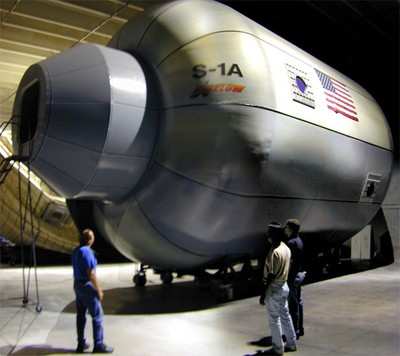
The 15-foot long module was designed to expand to 8 feet in diameter.

Genesis II is the second space module designed to test and confirm systems for future manned commercial space modules to be manufactured by the Las Vegas-based company.

As ANN reported, Genesis I was launched last year and operated as planned, expanding and transmitting pictures of itself in space. The module continues to successfully return data and images from Earth orbit.

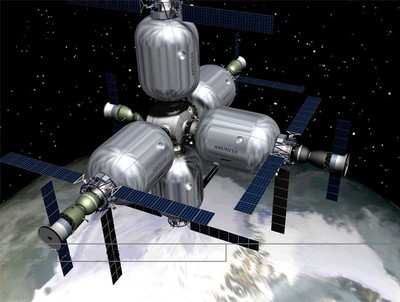
The modules have a flexible outer surface that is wrapped around a central core at launch and expands into orbit through air inflation. Several of these modules could be linked together to form a space station.

The skin is made of several layers including impact-resistant materials. The company says their test results indicate these expandable shells are much more resistant to space debris than the modules on the International Space Station.

Program Manager Eric Haakonstad says with the experience of Genesis I, they were better primed for the launch of Genesis II.

"With Genesis I, it was our first rodeo. We didn't know exactly what to expect," Haakonstad says. "This time, we were able to perform rehearsals and were more prepared for the launch phase."

The only problem so far was a brief communications difficulty in Russia, caused a delay in confirming Genesis II's separation from the Dnepr rocket.

"Any deviation from nominal magnifies the anxiety. When it came in four minutes later, it was a big relief," Haakonstad says.

FMI: www.bigelowaerospace.com

Advertisement

More News

Aero-News: Quote Of The Day (05.19.13)

"There are a million reasons to pick the C-130J, as the Hercules continues to demonstrate the ability to fulfill any mission at any time. Not only is this milestone a testament to >[...]

ANN FAQ: Have You Tried The ANN News Ticker?

Several years ago, ANN's first web-geek, Al Pike, designed a small "portable" News Ticker that offers current ANN headlines detailing what is happening in the aviation world. It ca>[...]

ANN's Daily Aero-Linx (05.19.13)

Aero Linx: Aerospace Medical Association (AsMA) The Aerospace Medical Association (AsMA) is organized exclusively for charitable, educational, and scientific purposes. It is the la>[...]

ANN's Daily Aero-Term (05.19.13): Direct

Direct Straight line flight between two navigational aids, fixes, points, or any combination thereof. When used by pilots in describing off-airway routes, points defining direct ro>[...]

Raytheon Delivers Electronic Jamming Capability For Gray Eagle UAS

Effort Will Mark First Time Army Has ECM Capability On Unmanned Aircraft Two electronic attack payloads in support of the U.S. Army's Networked Electronic Warfare, Remotely Operate>[...]

blog comments powered by Disqus


Advertisement

Advertisement

Podcasts

Advertisement

© 2007 - 2013 Web Development & Design by Pauli Systems, LC