Thu, Mar 12, 2009
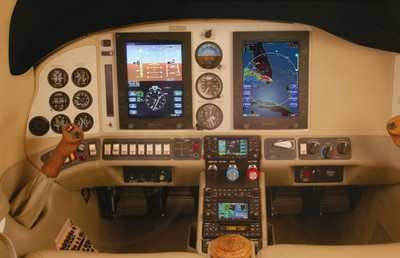
Claims Plane's PFD Was "Defective And Dangerous"
 The family of a pilot killed in a February 2008 landing
accident has sued avionics manufacturer Avidyne, claiming the
accident plane's primary flight display was "defective and
dangerous"... despite a National Transportation Safety Board ruling
that pilot error was to blame.
The family of a pilot killed in a February 2008 landing
accident has sued avionics manufacturer Avidyne, claiming the
accident plane's primary flight display was "defective and
dangerous"... despite a National Transportation Safety Board ruling
that pilot error was to blame.
The Oregonian reports the $10.5 million wrongful death and
negligence suit was filed on behalf of the widow and three children
of Dr. Richard Otoski. The suit claims problems with the Lancair
Columbia 400's autopilot and attitude/heading reference system
(AHRS) were causal to the aircraft crashing while Otoski attempted
to make an ILS approach in hard IFR conditions to Portland
International Airport (PDX) on February 16, 2008.
As ANN reported, the pilot and sole occupant
was killed when the plane crashed alongside Runway 10-Right at PDX.
The aircraft was making its second approach to land in heavy fog
when it deviated from the approach path -- in an apparent attempt
to go missed -- and clipped a tree. The observed runway visual
range (RVR) was below IFR minimums at the time of the accident.
"The airplane's turn to the southeast was consistent with the
missed approach course of 160 degrees; however, a climb to 900 feet
is required prior to commencing the right turn, as outlined on
approach plate's missed approach instructions," reads the NTSB
Probable Cause report. "It appears the pilot likely misinterpreted
the missed approach instructions by making the right hand turn
prior to initiating a climb to 900 feet, which resulted in the
subsequent impact with the tree.
"...The airplane continued on the collision course before
impacting the ground in a left wing low, nose down attitude, about
845 feet from the initial impact point with the tree," continues
the report. "It then traveled through an airport perimeter fence
before coming to rest on a perimeter road in an upright position,
about 15 feet from the ground impact point."
Otoski was killed on impact. The Probable Cause report notes
"[n]o preimpact anomalies were found during an examination of the
airframe and engine. The airplane's avionics components revealed
that they were too thermally and impact-damaged to provide any
data." The Board's determination was the accident was due to "the
pilot's failure to follow the missed approach procedure.
Contributing to the accident were the fog and below landing
minimums visibility conditions."

Also named in the lawsuit is the former Lancair Certified
Aircraft -- later Columbia Aircraft Manufacturing Company -- which
is now owned by Cessna.
More News
Also: B-29 Superfortress Reunion, FAA Wants Controllers, Spirit Airlines Pulls Back, Gogo Galileo Van's Aircraft posted a short video recapping the goings-on around their reorganiz>[...]
Light Gun A handheld directional light signaling device which emits a brilliant narrow beam of white, green, or red light as selected by the tower controller. The color and type of>[...]
"The journey to this achievement started nearly a decade ago when a freshly commissioned Gentry, driven by a fascination with new technologies and a desire to contribute significan>[...]
"Our driven and innovative team of military and civilian Airmen delivers combat power daily, ensuring our nation is ready today and tomorrow." Source: General Duke Richardson, AFMC>[...]
Aircraft Conflict Predicted conflict, within EDST of two aircraft, or between aircraft and airspace. A Red alert is used for conflicts when the predicted minimum separation is 5 na>[...]



 Airborne 04.16.24: RV Update, Affordable Flying Expo, Diamond Lil
 See All